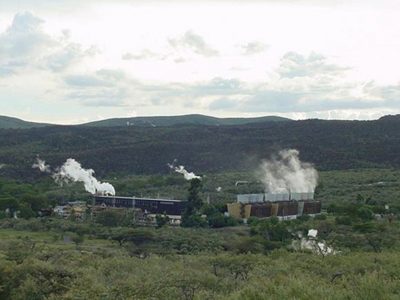
This is a guest article written by Esteban Jose Rodriguez and Caroline Bird.
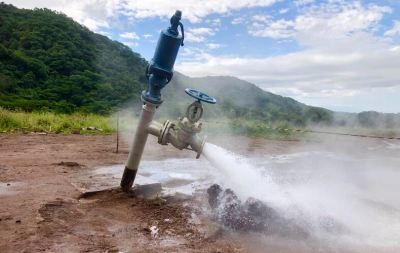
To harness the geothermal energy, wells are drilled into underground reservoirs where high-temperature fluids – steam, brine, or a mixture thereof – are brought to the surface to drive turbines or to supply thermal energy for direct-use applications. Areas located on active tectonic boundaries, such as the Pacific Ring of Fire or the East African Rift, have elevated volcanic activity and significant subterranean heat, making them especially conducive to geothermal development.
With proper reservoir management, geothermal systems can produce energy for decades with near-zero emissions, positioning them as long-term, sustainable energy resources that deliver both environmental and economic benefits.
While geothermal power is often discussed in terms of electricity production and grid contribution, its impact is even broader. In many regions, geothermal power supports local industries directly by providing thermal energy for numerous commercial applications. In these cases, the value of thermal energy also can be measured by the improvement in the operational continuity, product quality, or economic stability of the businesses and communities that depend on it.
This success story from Kenya illustrates how restoring the performance of a single geothermal well ultimately provided a reliable thermal energy supply for a local flower farm, demonstrating how a technical well intervention produced tangible, community-level benefits.
Geothermal power and heat in Kenya
Situated along the East African Rift, Kenya is recognized as a global leader in geothermal energy production and as the top geothermal power producer in Africa.
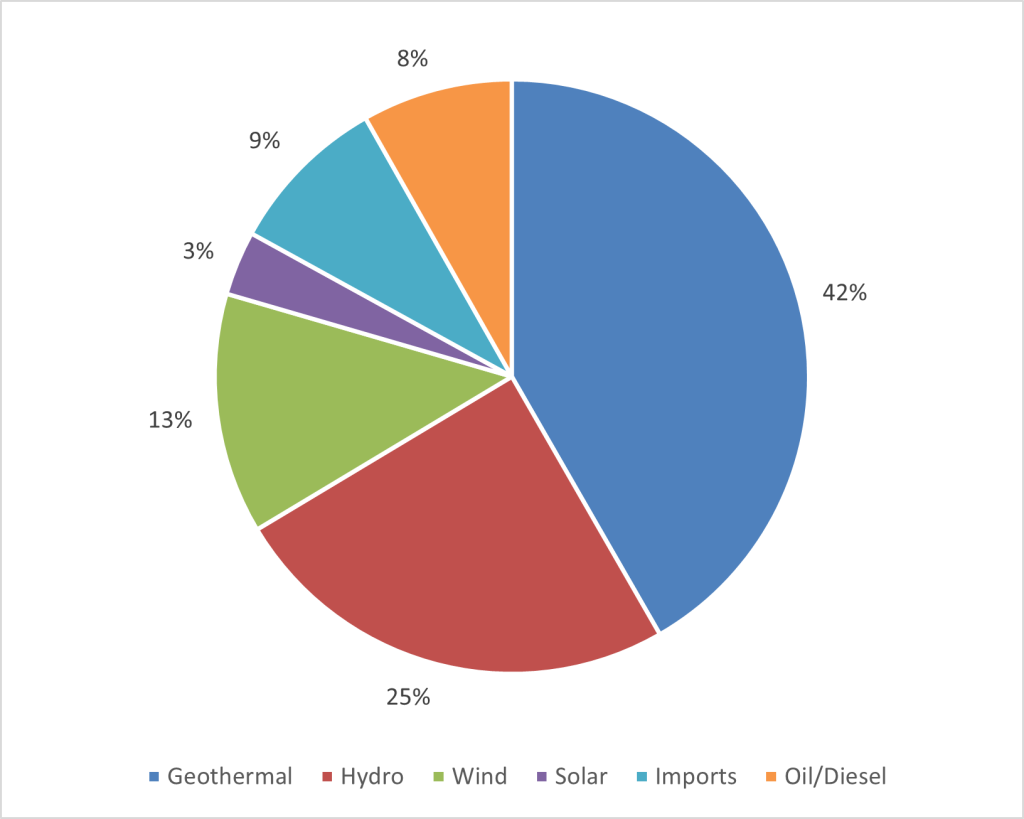
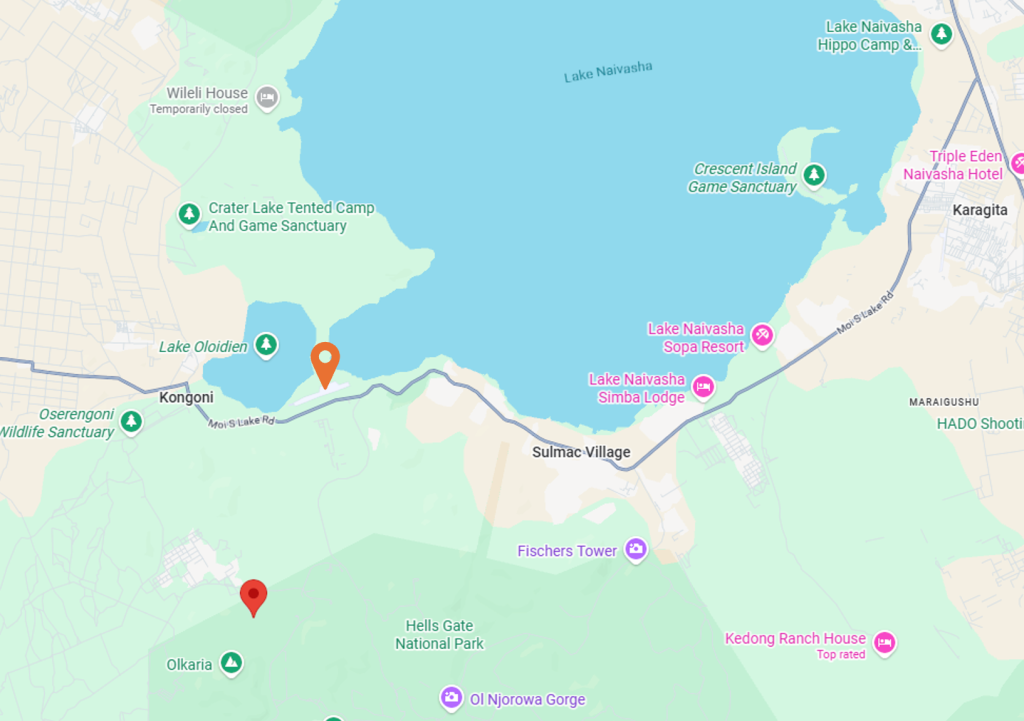
Kenya currently has more than 1000 MW of installed geothermal power capacity, primarily concentrated in the Olkaria region near Lake Naivasha. This places Kenya among the world’s top geothermal power-producing nations and enables geothermal power, in some years, to provide as much as or even more than 40% of the country’s electricity supply as shown in Figure 1 (Energy & Petroleum Regulatory Authority). Thus, geothermal power represents the largest portion of Kenya’s available electricity.
Since the drilling of the first exploratory wells in the 1950s, Kenya has steadily advanced its expertise in geothermal power by investing in reservoir engineering and drilling technology and reservoir management and well maintenance strategies. The geothermal energy available in the Olkaria region remains at the center of this development activity. Today, geothermal power supports both the national electric grid and key local industries through direct use applications, thereby playing a vital socio-economic role in Kenya by supporting jobs, industrial growth, agricultural exports, and the country’s broader sustainability objectives.
Direct use of geothermal energy in Kenya can be traced back to the 1930s, with significant growth since the 2010s, mainly in agriculture and tourism.
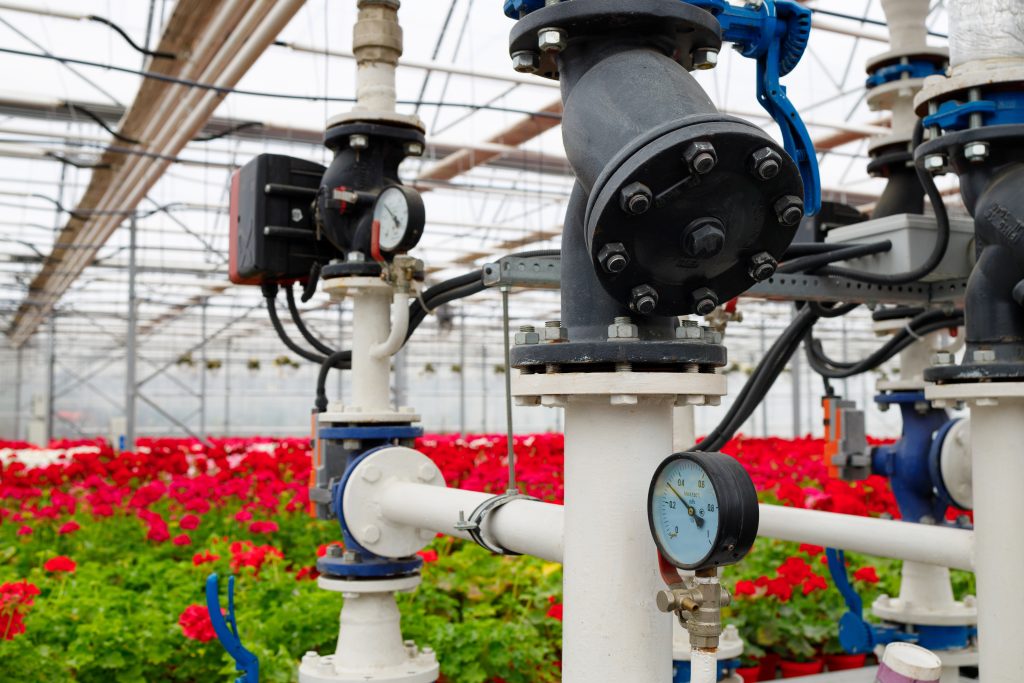
Examples of the direct use of geothermal energy are abundant. A large, 5000-acre floral farm depends on reliable, low-carbon energy for greenhouse heating and soil warming. Tilapia and catfish have been grown in geothermally heated aquaculture ponds, where maintaining optimal water temperature maximizes fish growth and protects the fish against cold weather. Drying flowers and grains, pasteurizing milk, and heating pools and spas are also direct use applications. In all these examples, the direct use of geothermal energy reduces the need for fossil fuel imports and contributes to the local economy.
Integrating direct heat from geothermal power, a predictable and reliable energy source, has enabled these businesses to operate year-round. However, direct heat is only as reliable as the well’s production is consistent. Production from geothermal wells declines for various reasons, but particularly because of scaling inside the wellbore or the formation. This requires the use of innovative solutions such as chemical stimulation and scale removal technologies with the assistance of a team of specialty chemical experts.
Geothermal well stimulation – a case study
Geothermal operators have traditionally relied on mechanical interventions and inhibitors to remove scales in wells and keep them in operation. When these options failed, wells were removed from operation or abandoned. Proving the success of this novel well stimulation program provides a new option for power producers to keep the wells in operation.
Customer Background
The Olkaria Central Field, where this challenging well is located, is known to consist of soda rhyolite, quartz and alkali feldspars. Field surveys were conducted and the results showed additional rock formations consisting of pyroclastics deposits, primarily pumiceous tuffs containing a heterogeneous assemblage of rock fragments, including riebeckite rhyolite, basalts and interbedded tuffs and rhyolite. Hydrothermal alteration minerals, minerals that are typically rich in dissolved gases, salts and metals, were also present in the field in the form of oxides, clays, calcite, fluorite, zeolites and silica minerals such as quartz (Opondo, 2015).
Customer Challenge
A geothermal power producer in Kenya was experiencing significant issues with a well that was providing thermal energy for a large local flower farm. That well had been drilled in 1996 in the Olkaria Central Field but was shut in because of production issues until 2004. Beginning in 2004, after the well was reopened, it produced 1.4 MW; however, by 2007 it had declined to 0.4MW. This production loss was consistent with a progressive restriction within the wellbore and possibly the formation.
For a direct-use agricultural application, this reduction in available energy translated into operational uncertainty and operational instability. A mechanical cleaning of the well was completed in 2024; however, this process failed to restore the well to its previous operational capacity. The mechanical cleaning removed only loose debris and some accessible deposits, leaving most of the critical flow paths blocked.
To address these issues, the power producer engaged Solenis, a leading global provider of water treatment and process solutions. Their team of experts, after completing a site evaluation of several wells, modeling the well brine, and analyzing well cuttings and samples, identified significant calcite scaling in the wellbore. Calcite deposition commonly forms as pressure and temperature changes shift carbonate equilibrium, thereby promoting precipitation along the casing and production zones. This ultimately results in a significant restriction in the flow, making a chemical intervention necessary when mechanical methods alone prove insufficient.
Recommended Solution
The team of experts suggested the customer implement a technical well intervention using the innovative GeoSol™ well cleaning program, a proprietary advanced cleaning technology, to solve its well performance challenges because other methods were unsuccessful. The well stimulation program cleans affected rock formations by applying specialized cleaning chemicals designed to dissolve scale buildup.
A critical differentiator of this program is the emphasis on controlled mineral dissolution rather than aggressive, generalized acidizing. Historically, the adaptation of these traditional methods to geothermal applications has been based on two key assumptions:
- That the geological settings of oil and gas reservoirs are comparable to those of geothermal fields, and
- That chemical delivery via coiled tubing at depth ensures direct placement into the target feed zones.
Both assumptions, however, are flawed. The first assumption overlooks critical differences in mineralogy. Indiscriminate acidizing can trigger unintended reactions, including reactions such as rapid carbonate re-precipitation, clay destabilization and secondary silicate formation or secondary reactions involving minerals such as calcite and alumino-silicates. These reactions can reduce treatment efficacy significantly, particularly at temperatures greater than 120?°C and in formations with high K-feldspar content. By contrast, this well stimulation program integrates laboratory compatibility testing, kinetic modelling and field specific mineralogical characterizations.
The second assumption is not universally valid. Low-flow, high-concentration chemical slugs tend to follow the path of least resistance. Consequently, even when injected at depth, the chemicals may migrate upward or downward in the wellbore, thereby bypassing the intended zones entirely. Leveraging advanced principles of reservoir engineering, geology, and pumping dynamics, this well stimulation program uses low chemical concentrations combined with high pressure, high flow rates, and precisely controlled flow. This approach ensures the chemicals penetrate deep into rock fissures for effective treatment.
Solenis’ method addresses each of the flawed assumptions. First, a detailed geological assessment was conducted to evaluate the potential for detrimental secondary reactions to the novel treatment solutions. Second, flowing pressure-temperature-spinner surveys were used as part of a comprehensive diagnostic strategy to confirm fluid movement and to ensure that the treatment reaches the zones most affected by mineral deposition (Remoroza et al., 2025).
Results
The well stimulation program was implemented in October 2025, and the customer saw immediate results. After the well was allowed time to heat up, the customer opened the well and quickly realized that the brine transfer pump needed an upgrade because production capacity had increased significantly. Production increased from 0.4 to 2.7 MWe. This is an astounding 500% improvement from the previous capacity. Notably, in the past, the well never sustained flow when tested using a 3-inch Lip pipe.
The table below shows the historical production from the well with data from 1998 to 2025 after the well stimulation was conducted. After the chemical stimulation, the well was able to sustain flow at this Lip pipe diameter, which speaks to the improved permeability of the feed zones.

The increase in production from 0.4 to 2.7 MWe signifies a substantial restoration of mass flow and heat delivery from the reservoir. For the flower farm that relies on direct geothermal heat, this translates into renewed operational continuity and economic stability and reliable and abundant thermal energy availability. Although electrical output is the standard industry metric for measuring well performance, the practical impact in this case is the restoration of a consistent, high-temperature brine supply capable of supporting continuous processing and heating demands.
Sustained flow at larger diameters indicates less flow resistance, better reservoir connectivity, and better deliverability, all of which contribute to longer-term production reliability. This outcome not only exceeds the well’s historical peak output but also reinforces the value of carefully engineered chemical stimulation as a tool for revitalizing mature geothermal wells.
From a sustainability perspective, the restored 2.7 MW output represents a meaningful reduction in greenhouse gas emissions when compared with conventional alternatives. Assuming continuous operation, a 2.7 MW well produces approximately 23.7 GWh per year. If this same energy were generated by using diesel technology, annual emissions would total roughly 5,600 tons of CO?. By contrast, based on a specific steam consumption of 8 tons per MWh, the geothermal well would emit approximately 1,900 tons of CO? annually under equivalent generation. This results in an estimated net avoidance of nearly 3,700 tons of CO? per year.
In practical terms, not only did the well restoration revitalize the thermal supply for the end-user but the restoration also reinforced Kenya’s low-carbon energy strategy by displacing significantly higher-emission diesel power generation. The intervention therefore delivered both operational and climate benefits, extending the productive life of an existing renewable asset while preventing thousands of tons of additional carbon emissions each year.
The freshly cleaned well supplies steam to the 1.2 MW power plant that serves the flower farm. At an electricity value of $0.07 per kilowatt-hour, the restored production delivers an incremental revenue of approximately $60,480 per month, equivalent to approximately $725,760 annually, clearly demonstrating the strong economic return on investment for this well stimulation.
Community Impact
Beyond energy metrics and production statistics, the restoration of this well has a tangible impact on the surrounding community.
For a local 5,000-acre flower farm, this represents thousands of direct and indirect jobs, from cultivation and harvesting to packaging and logistics. The farm grows and exports high quality flowers, including roses, carnations and green filler products, to multiple parts of the world. To meet international export standards, the greenhouse where the products are grown requires precise climate control. With a constant supply of geothermal heat, meeting the standards is accomplished much more efficiently, supporting crop quality and year-round production.
When the supply of thermal energy is unstable, agricultural output, product quality, and employment stability all can be affected. By restoring dependable heat delivery, the well stimulation project contributed not only to energy reliability but also to local economic continuity and workforce stability. Thus, the restoration of the well supports the near-carbon-free business that the floral farm aims for and sets a standard for other businesses to follow.
The growing stages of these products are almost carbon-free, which partially offsets the impact that transporting these products has on CO? emissions. This is the only floral farm in Kenya to utilize solely renewable energy sources. In global markets where buyers increasingly evaluate supply chain carbon intensity, near-carbon-free cultivation provides a meaningful competitive advantage. Reducing emissions at the production stage significantly lowers the overall carbon footprint of exported flowers.
The integration of geothermal direct-use heat into this large floral farm demonstrates how geothermal energy can move beyond electricity generation to become a foundational driver of low-carbon industrial growth. In this way, the success of a single well stimulation contributes not only to operational performance but also to a broader model of sustainable development that aligns environmental stewardship with economic opportunity.
Conclusion
The restoration of the well demonstrates how novel, geothermal well-specific solutions can significantly improve energy production, economic outcomes, and community sustainability in Kenya. By applying the well cleaning program, Solenis helped transform an underperforming asset into a reliable, high-capacity energy source, thereby boosting output by more than 500% and directly supporting one of Kenya’s most important flower farms.
Beyond the immediate production gains, the well stimulation delivered measurable sustainability benefits and avoided thousands of tons of CO? emissions annually compared to the use of diesel-based energy alternatives, while preserving the integrity of the reservoir through a carefully engineered chemical intervention.
The success of this well intervention reinforces the essential role that geothermal energy plays in Kenya’s renewable energy-focused power grid and highlights how targeted chemical stimulation techniques can safely and efficiently extend the life of existing geothermal wells. Importantly, it highlights a broader industry lesson: production decline does not necessarily signal reservoir exhaustion. With the right diagnostics, laboratory validation, and field execution, mature geothermal wells can be revitalized to meet modern performance expectations.
As Kenya and other geothermal energy-rich countries continue to prioritize clean energy, advanced well stimulation programs like the GeoSol well cleaning program offer a proven pathway to maximize production, strengthen local industries, and deliver long-term environmental and economic benefits. Revitalizing this well in order to harness geothermal energy for this direct-use application by the floral farm illustrates how technical innovation in well maintenance strategies can translate directly into national resilience, community prosperity, and sustainable growth.
References
Energy & Petroleum Regulatory Authority. Biannual Energy & Petroleum Statistics Report. 2024,
www.epra.go.ke/sites/default/files/2025-03/Bi-Annual%20Energy%26%20Petroleum%20Statistics%20Report%202024_2025.pdf.
Opondo, Kizito M. “Carbonate Scale Formed in Well OW-202 in Olkaria Central Field, Kenya.” Proceedings of the World Geothermal Congress 2015, Melbourne, Australia, 19–25 Apr. 2015, Kenya Electricity Generating Company (KenGen).
Remoroza, Alvin I., et al. “Application of Solenis Chemical Cleaning Method to Free Up Stuck CIS Tubing in EDC Production Wells.” Geothermal Rising Conference, Peppermill Resort, Reno, NV, 29 Oct. 2025.