Fervo Energy has increased the size and pricing range of its proposed initial public offering (IPO), signalling strong investor demand for next-generation geothermal technologies, particularly enhanced geothermal systems (EGS).
According to updated filings and an official company announcement, the US-based developer now plans to raise up to $1.8 billion, up from an earlier target of about $1.33 billion. The IPO has not yet been priced.
IPO upsizing reflects investor appetite for firm clean power
Fervo raised its proposed share count from 55.6 million to 70 million shares, while increasing the indicative price range from $21-24 per share to $25-26 per share. Based on the revised range, the company could achieve an implied valuation of approximately $7.4-7.5 billion. See our earlier coverage.
The move comes amid growing investor focus on firm, dispatchable clean energy sources, particularly those aligned with rising electricity demand from data centres and artificial intelligence applications. Fervo has positioned itself in this space through partnerships that include Google and Southern California Edison.
The company confirmed the updated IPO terms in its announcement, noting that pricing is expected imminently, subject to market conditions.
Valuation approaches established geothermal players
At the midpoint of the revised pricing, Fervo’s valuation approaches that of Ormat Technologies, one of the world’s largest publicly traded geothermal operators, which currently has a market capitalisation of roughly $7.76 billion.
The comparison highlights a notable shift in market perception. While Ormat operates a global portfolio of producing geothermal assets with stable revenues, Fervo remains in a development phase, with its value largely tied to future project delivery and technology scaling.
For context, Fervo reported revenue of approximately $138,000 in 2025, alongside a net loss of around $70 million. This underscores the gap between current financial performance and investor expectations embedded in the valuation.
Large pipeline and contracted backlog underpin growth case
Fervo’s investment case is anchored in its project pipeline and contracted revenue base. The company reports:
- Around 2.6 GW of advanced-stage geothermal projects
- Approximately 38 GW of early-stage development pipeline
- Roughly $7.2 billion in contracted power purchase agreement (PPA) revenue
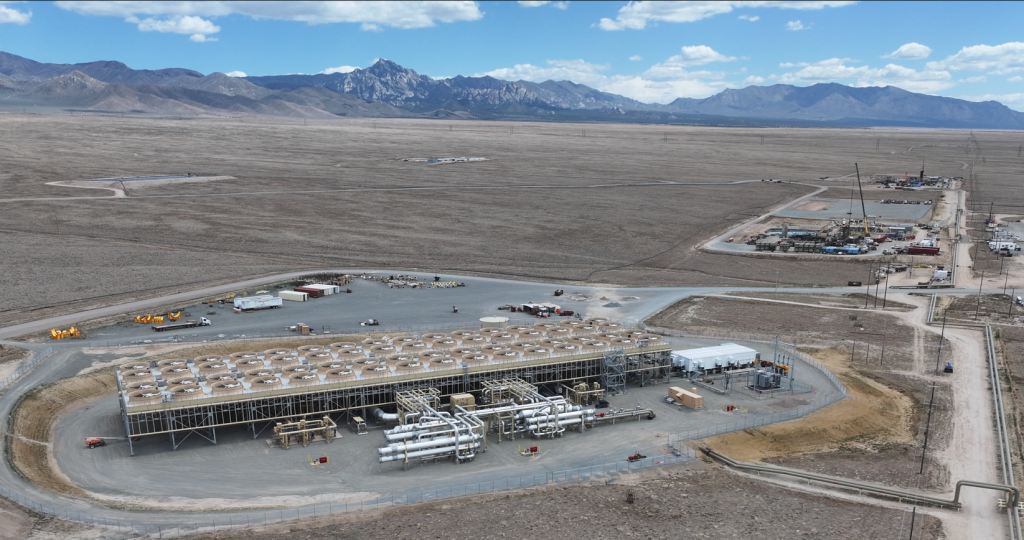
Its flagship Cape Station project in Utah, targeting up to 500 MW of capacity, is expected to play a central role in demonstrating commercial-scale EGS deployment.
The company has also attracted backing from major investors including Breakthrough Energy Ventures and Devon Energy, reflecting continued cross-over interest from both climate-focused and oil and gas stakeholders.
Technology promise and cost reduction targets
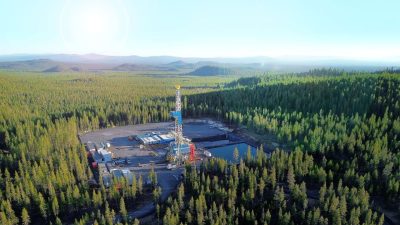
Fervo’s approach combines horizontal drilling and hydraulic stimulation techniques adapted from the oil and gas sector to unlock geothermal resources beyond conventional hydrothermal systems.
The company reports reductions in drilling time of up to 75% and cost reductions of around 70% in recent operations. It also targets long-term capital costs of roughly $3,000 per kW, down from earlier estimates near $7,000 per kW.
However, these performance metrics remain to be proven at full commercial scale. Large-scale deployment of EGS, including sustained reservoir performance and cost consistency, is still in the early stages of validation.
Market signal for geothermal, but execution remains key
The upsized IPO points to increasing investor willingness to back geothermal as a scalable, infrastructure-grade clean energy source, particularly in the context of rising demand for reliable power supply.
At the same time, the valuation reflects expectations that hinge on successful project delivery, especially at Cape Station, and the broader scalability of EGS technology.
For the geothermal sector, the listing could mark a shift in capital market visibility. It may open pathways for new financing models and increased investor attention, but it also sets a benchmark that will depend heavily on execution in the coming years.
Source: Fervo Energy release