
Geothermal industry in U.S. ends year on high note

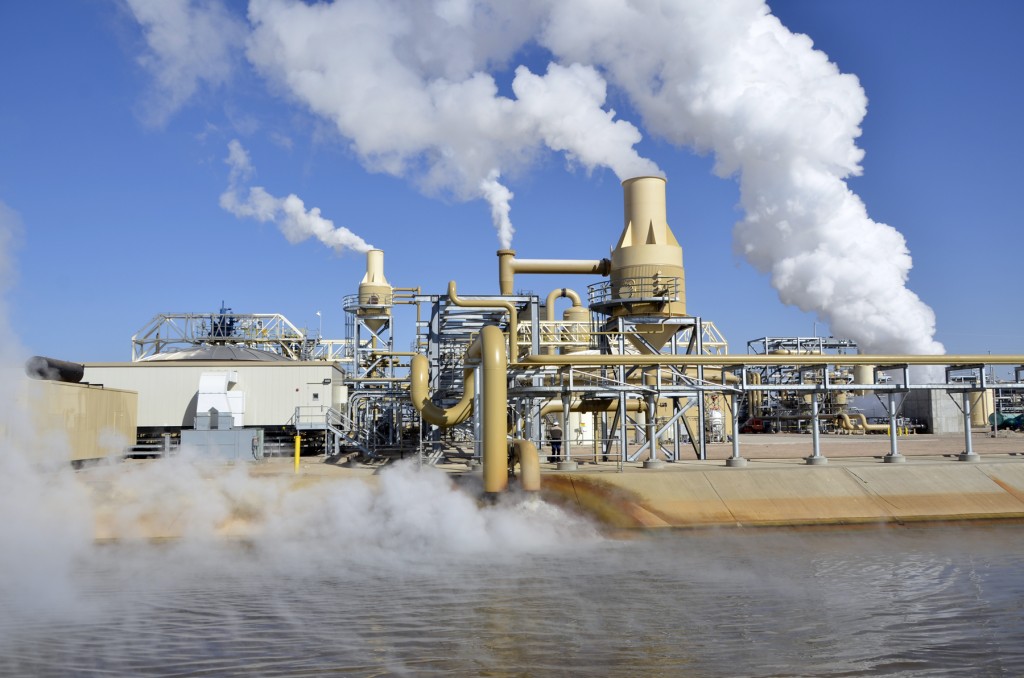
In a release, the U.S. Geothermal Energy Association reports a slightly more promising year end note for 2012 and outlook for 2013.
In a release today, the U.S. Geothermal Energy Association reports that the geothermal industry in the U.S. ends the year on a high note.
“The past 12 months saw continued economic challenges for many American industries, including those in the renewable energy field, but the country’s geothermal community witnessed a year of growth, both domestically and abroad.” In the release today, GEA expresses “optimism for 2013, while looking back on a difficult, yet ultimately successful 2012.
In 2012, seven new geothermal projects and additions came online in three different states, totaling 147.05 MW of gross capacity. This represents the second highest increase in geothermal power capacity over a calendar year since the production tax credit (PTC) was extended to geothermal in 2005, and a 5% percent increase over 2011 year-end data. The capacity added in 2012 would meet the residential needs of a city the size of Vancouver, Washington or Kansas City, Kansas. Projects and new additions that came online in 2012 include:
- John L. Featherstone Plant (CA): Energy Source, 49.9 MW
- McGinness Hills (NV): Ormat, 30 MW
- Neal Hot Springs (OR): U.S. Geothermal, 30.1 MW
- San Emidio I (NV): U.S. Geothermal, 12.75 MW
- Tuscarora (NV): Ormat, 18 MW
- Dixie Valley I (NV): Terra-Gen, 6.2 MW
- Florida Canyon Mine (NV): ElectraTherm, 0.1 MW
In addition to these seven projects, GEA identified 13 geothermal companies with projects in stage 3 or 4 of development. Some of these projects are expected to come online in 2013.
Some additional highlights of geothermal industry development in 2012 were:
- The first hybrid solar-geothermal project was commissioned by Enel Green Power at its Stillwater Geothermal Power Plant.
- The first co-production of geothermal power at a gold mine was commissioned by ElectraTherm at the Florida Canyon Mine in Nevada.
- The first in a decade high-temperature flash steam geothermal power plant was brought on-line in Southern California by Energy Source, the 49.9MW John L. Featherstone Geothermal Power Plant.
- The first utility-scale geothermal power plant in Oregon was brought on-line at Neal Hot Springs by U.S. Geothermal.
International development
The international geothermal market continues to expand at a significant rate, and 2012 saw a number of global breakthroughs.
U.S. companies and agencies continued to maintain a strong presence in international markets including Indonesia, the Philippines, Japan, Kenya, Rwanda, Nicaragua, Turkey, Mexico, Chile and Germany, where leaders have begun to understand and embrace geothermal’s economic and environmental benefits.
Africa is a continent with enormous untapped geothermal potential, and the U.S. government showed its commitment to helping achieve this potential. In June, GEA and the U.S. Agency for International Development (USAID) signed a memorandum of understanding agreement to assist East African countries expand their geothermal markets, while also creating opportunities for U.S. companies to initiate new business in the region. Countries like Kenya, which set a goal of bringing 5,000MW of geothermal power online by 2030, stand to benefit greatly from this agreement and the establishment of the USAID-GEA U.S.-East Africa Geothermal Partnership (EAGP) program.
A number of U.S. geothermal companies were active around the globe in 2012, including:
· Ram Power, whose San Jacinto-Tizate geothermal plant in Nicaragua began commercial operation in January. The second phase of construction, to be completed late this year, will bring the plant’s capacity from 38.5 MW to 77 MW. When the project is completed it will represent a 10% addition to Nicaragua’s current power generation portfolio and provide a major economic boost to the country.
- Geothermal Development Associates, which designed and supplied major equipment for the Eburru Wellhead Geothermal Power Plant in Kenya. The plant was commissioned and began generating power up to 2.52 MW in January.
- Ormat, which won a Kenyan government tender to build a power station at the Menengai geothermal field near Nairobi, and secured a $310 million loan from the U.S. Overseas Private Investment Corporation for its Olkaria III geothermal plant in Naivasha, Kenya.
- Geo-Global Energy in Chile completed the most productive geothermal well ever drilled in South America.
- POWER Engineers signed a contract for full engineering and procurement services for the new Las Azufres plant in Mexico and was involved in new plant engineering in Turkey and Nicaragua.
Technological Advancements
One of the most vital aspects of the geothermal industry’s growth is technological advancement, and there were many of note in 2012.
- Enhanced geothermal systems (EGS) technology – the process of extracting heat from engineered reservoirs through fluid injection and rock stimulation – represents the opportunity to tap into staggering geothermal potential. At the world’s largest series of geothermal plants, The Geysers in California, the U.S. Department of Energy invested $6 million in EGS technology, which resulted in a 5MW equivalent of geothermal steam at this Calpine-operated project, that is now on its way to commercial production. The Geothermal Technologies Program is focused on lowering risk and cost in hydrothermal resource exploration and development, and on establishing the technical and commercial viability of EGS through a combination of R&D and demonstration projects.
- The Department of Energy was also active at the Salton Sea geothermal plant operated by Simbol Materials. At this demonstration facility, Simbol is working to produce lithium, manganese and zinc from geothermal brines during the geothermal power process. The company plans to continue this work, which it believes has the potential to produce enough lithium for 300,000-600,000 electric vehicle batteries per year, and to turn the United States into a major lithium producer.
Policy
The presidential campaign of 2012 highlighted energy as an issue of the utmost importance to the public, and President Barack Obama’s support for renewables contributed significantly to his re-election. An increasing number of Americans are throwing their support behind geothermal and other renewable sources, and this public backing was evident in an election that featured Obama’s plans for a clean energy future.
California implemented the nation’s largest cap-and-trade program to date to limit greenhouse gas (GHG) emissions, following the goals of state mandate AB 32, the overall effort to lower emissions by 30% by the year 2020. While a program that started in 2009 in the mid-Eastern states limits emissions from electric utilities, the Golden State’s new program goes beyond to include large industrial facilities in 2013 and will add distributors of transportation, natural gas and other fuels in 2015. The geothermal industry in California supported the program, offering geothermal as a roadmap to meet the goals of the program and its mandate, as geothermal plants emit extremely low levels of GHGs – and zero emissions in some cases – and represent a firm yet flexible alternative to high-emission energy sources such as coal and natural gas.
Congress took action on a bi-partisan basis to help geothermal in 2012. Top on the list of several significant measures that saw favorable Committee action was the Senate Finance Committee’s “Family and Business Tax Certainty Act.” It would allow projects to lock in the federal tax credits once they were “under construction,” instead of current law’s approach which requires them to be producing power by a specific date, and that date right now is January 1, 2014. The Senate Finance Committee approved the change on a strong bi-partisan vote, and it is actively under discussion in the lame duck session’s “fiscal cliff” negotiations. If it is adopted, it could spur strong growth in geothermal power for several years.
2013 Outlook
The geothermal industry is poised to build on its 2012 successes in the coming year. Across the globe more and more countries are unearthing their geothermal potential, and in the United States hopes are high that the PTC will be extended, further bolstering the industry. An extension of the PTC would be a boon for geothermal, and an uptick in construction would likely ensue.
As the U.S. and nations around the world look to replace fossil fuels to minimize the threat of global warming, geothermal power will grow in its value and importance in the years ahead. Geothermal can provide both firm and flexible power. It can bring the reliability of 24/7 baseload power or complement other energy technologies by firming up more intermittent power generation. It can also provide power for small co-production projects to large utility scale power plants.
Source: Release by GEA by email