
IGME study proposes management strategy for sustainable shallow geothermal use

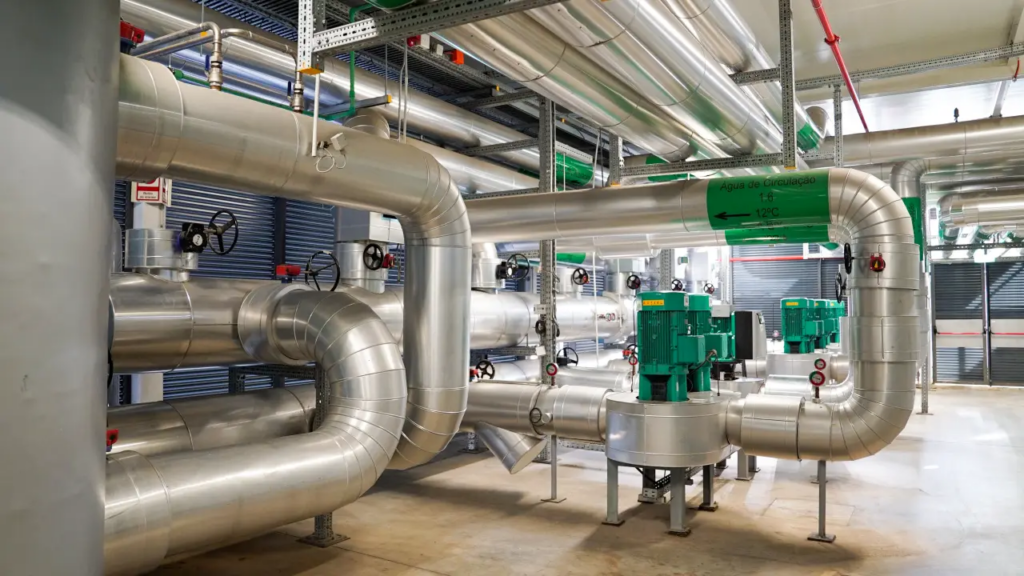
A new study by Spain’s IGME proposes a management methodology that aims for more sustainable utilization of shallow geothermal energy resources.
A new study by the Geological and Mining Institute of Spain (IGME-CSIC) and the Hydrographic Confederation of the Ebro (CHE) proposes a new management strategy for the sustainable use of shallow geothermal energy resources. The method was applied to 24 shallow groundwater heat pump (GWHP) systems in five European cities.
The full paper by Martinez-Leon et al, “Novel management strategies for optimizing shallow geothermal energy exploitation: A European urban experience perspective,” has been published in the Renewable Energy journal. (https://doi.org/10.1016/j.renene.2024.122163)
The participation of the Geological Survey of Slovenia, the British Geological Survey, the Technical University of Munich. and the University of Basel allowed for the methodology to be applied in different shallow geothermal installations across Europe.
The management strategy is based on two alternatives proposed by the study :
- Prioritizing higher flowrates over lower temperature changes
- Prioritizing higher temperature changes over low flowrates
The optimization methodology is proposed with the aim of reducing the thermal impact of GWHP systems on urban aquifers. The figure below schematically shows the steps for optimization:

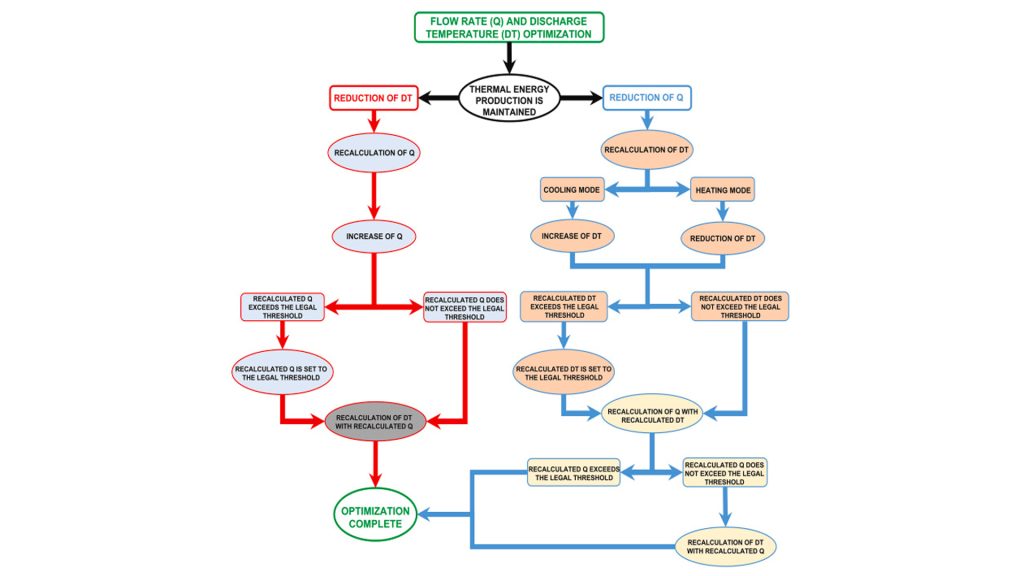
Three types of optimizations were proposed based on the intended use of the GWHP system with appropriate systems identified – cooling mode (Basel, Munich), heating mode (Ljubjana, Cardiff, Basel), or dual mode (Zaragoza).
The analysis of the data shows two important conclusions:
- Increasing the flow rate and reducing temperature changes resulted in an average reduction of 1.48 °C in the discharge temperature across all GWHP systems
- increasing the temperature changes while reducing the flow rates led to a reduction of the flow rates of all GWHP systems to an average 8.09 L s?1
In either case, the method allows for the optimal utilization of shallow geothermal resources without significantly compromising the energy supply. The method is particularly effective for regulating thermal discharges from GWHP systems where well relocation is not feasible due to spatial or economic constraints.
Source: IGME-CSIC