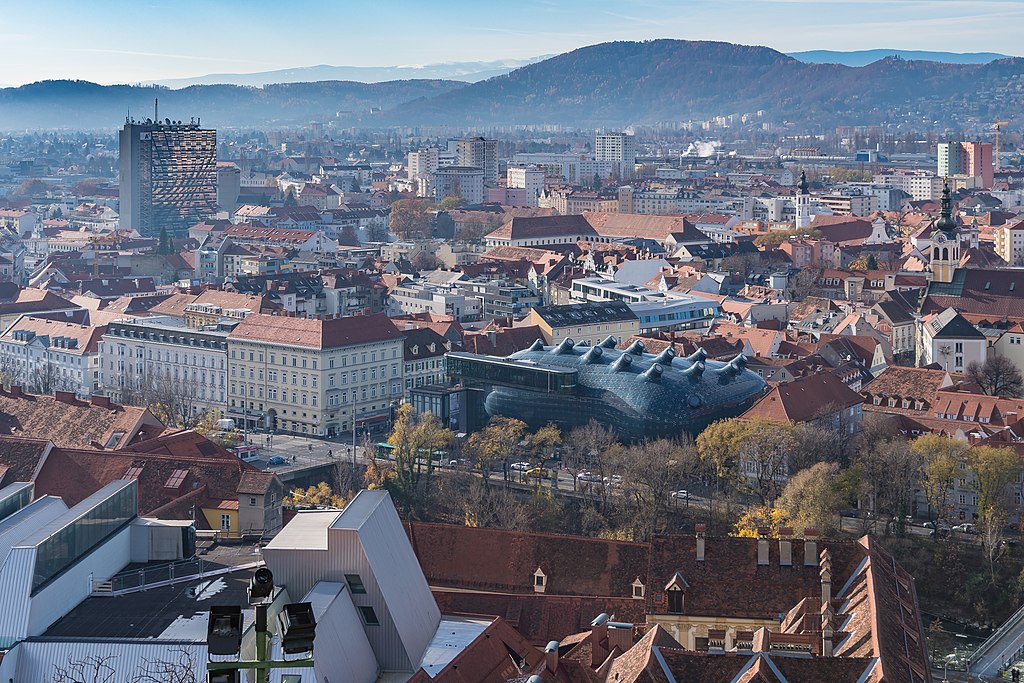
After a contentious period between project partners and a surprising resolution earlier this year, the proposed deep geothermal heating project in Graz, Austria seems back on track. The city of Graz has negotiated new contracts with OMV and Energie Steiermark, which are scheduled to be approved at the city council meeting on May 21st.
The contracts set to be finalized and signed are the following:
- A cooperation agreement between the participating companies
- An agreement on the sharing of opportunities, risks, costs, and revenues
- A heat supply contract
- A heat transport service contract.
The Graz city council coalition described the newly negotiated contracts as a “viable, legally sound, and economically responsible basis” for the project. The original agreements, they argued, did not meet these criteria. All points of conflict have now been revised, ensuring planning certainty and stable liquidity.
According to the new contracts, a joint venture between OMV and Energie Steiermark will be responsible for drilling and energy production. Energie Steiermark will construct the pipelines to Graz, and Energie Graz will take over the heat supply from the city limits and ensure distribution to households. However, Energie Graz will be paying a risk premium of EUR 3.5 million over ten years, totaling EUR 35 million.
Mayor Elke Kahr thanked all the players involved for finding a solution, stating that geothermal is another contribution to the environment-friendly and independent heat supply for the people of Graz.
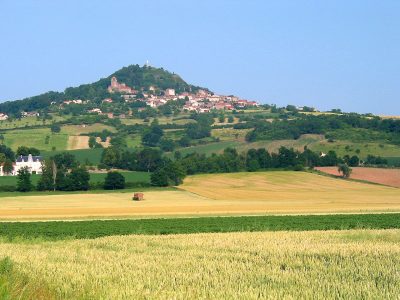
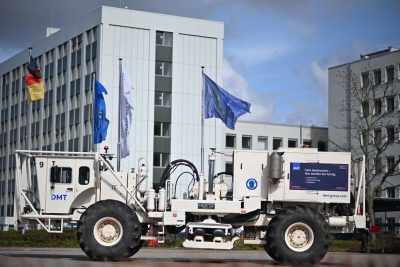
The data collected from the seismic survey recently completed by OMV are now being analyzed. This dataset will then be used to identify potential geothermal deposits. If results are optimistic, exploratory drilling could begin by Q4 2026, with the potential site located in in the municipality of St. Marein. The decision on whether to proceed with drilling is expected by mid-2026.
“When wars and international crises drive up our heating costs in Graz, it shows very clearly how dependent we still are on fossil fuels. My goal is clear: out of natural gas and towards renewable, reliable heat for Graz,” said Deputy Mayor Judith Schwentner.
“Especially in times of exploding energy prices, it is becoming clear to us that our dependence on fossil fuels is costing us dearly. Therefore, it is only logical to support this project with all our strength,” added SPÖ Chairwoman Doris Kampus.
The geothermal heating project is part of the mission of the city of Graz to increase the share of green heat to more than 60% by 2030. From 2035 onward, the criteria for an 80% share of renewable energy in district heating systems must be permanently met.
Source: Wiener Boerse