
PhD opportunity – Geothermal in the UK agri-food sector, Belfast, Northern Ireland

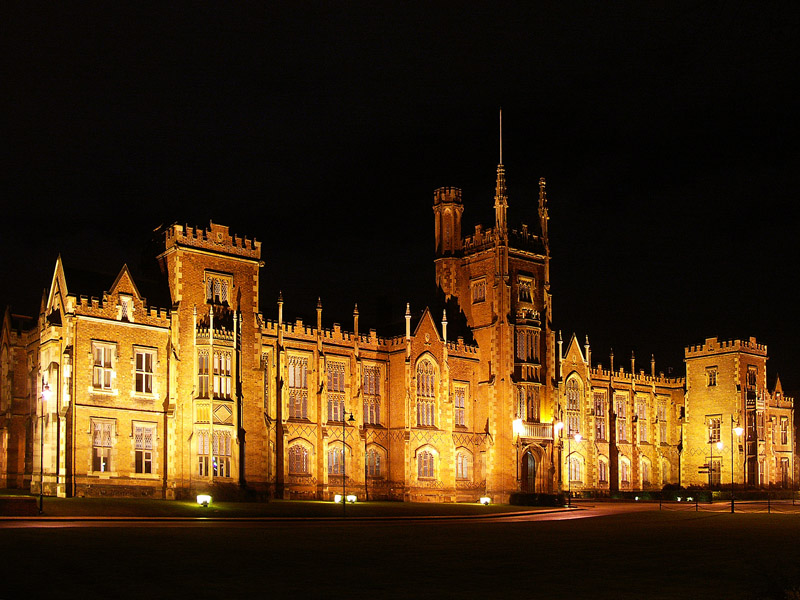
KONICA MINOLTA DIGITAL CAMERA
The Queen’s University Belfast in Northern Ireland has an open fully funded PhD position for a project on geothermal direct use for the UK’s agri-food sector.
The School of Natural and Built Environment at the Queen’s University Belfast in Northern Ireland is advertising a PhD position under the project “QUADRAT DTP: AgriTherm – The role of geothermal energy in decarbonising the UK Agri-Food sector.”
This fully-funded, 42-month PhD project is part of the QUADRAT Doctoral Training Partnership. Funding will cover a monthly stipend for accommodation and living costs, tuition fees, and research and training costs. The opportunity is open to UK and International Students.
For more information, please visit the official PhD opportunities page of Queen’s University of Belfast.
Application procedures
- Please visit this page for full application information: How To Apply – QUADRAT
- Please send your completed application form, along with academic transcripts to quadrat-admissions@abdn.ac.uk
- Please ensure that two written references from your referees are submitted. It is your responsibility to ensure these are provided, as we will not request references on your behalf.
- Unfortunately, due to workload constraints, we cannot consider incomplete applications.
- CV’s submitted directly through a FindAPhD enquiry WILL NOT be considered.
- If you require any additional assistance in submitting your application or have any queries about the application process, please don’t hesitate to contact us at quadrat-admissions@abdn.ac.uk
Project background
Agriculture is a major source of greenhouse gas emissions in the UK. In Northern Ireland, agriculture remains the highest-emitting sector and the only sector to have shown an increase since the base year of 1990. Overall, the UK’s agri-food industry is responsible for almost a quarter of the country’s greenhouse gas emissions.
Geothermal energy provides an abundant source for reliable 24/7, always-on energy, which ranges from deep high temperature applications for electrical power generation to lower temperature systems for Direct-Use Geothermal Energy (DUGE) applications for heating & cooling.
Using Northern Ireland as a case study, the project will draw on the expertise from collaborators across the areas of Earth & Environmental Sciences, Social Sciences, Agri-Food, Finance, Energy Policy and Management to develop and co-create a joint proposition for the application of Direct-Use Geothermal Energy for the UK agri-food sector. The project will engage with stakeholders across the agri-food sector to co-analyse the opportunities and challenges for DUGE and to jointly develop tailored implementation approaches.
In doing so, the project will combine the technical evaluation of available DUGE resources for the agri-food sector with active social science research highlighting current barriers for the uptake of DUGE across the agri-food sector and evaluating market-forming strategies and underpinning financial instruments to realise the potential for DUGE applications across the industry.
Source: Email correspondence