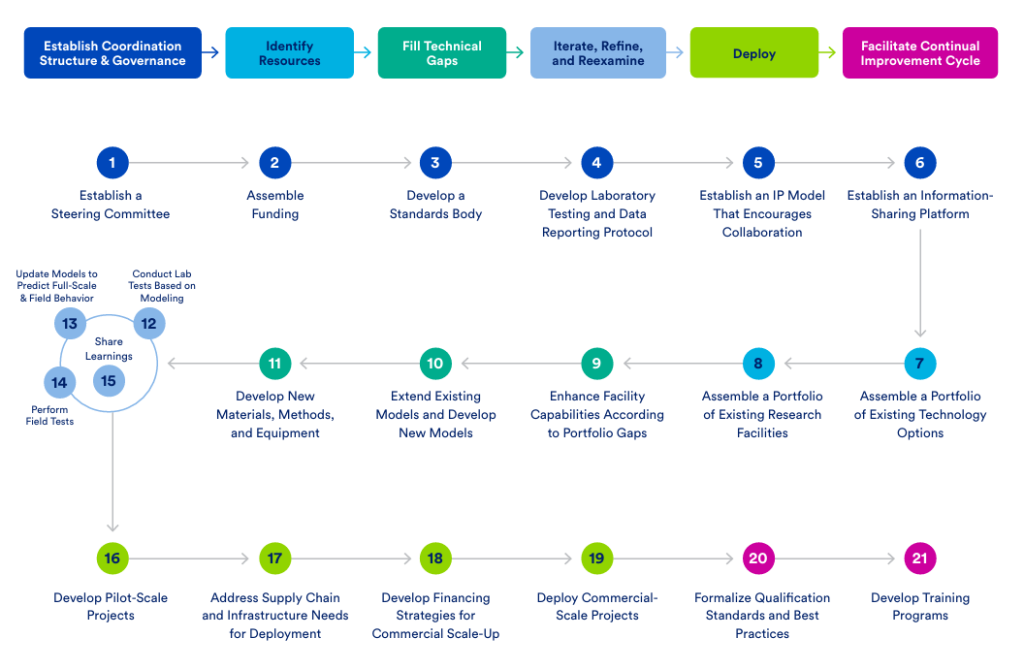
A reported published by the Clean Air Task Force (CATF) proposes a roadmap and practical strategy to improve the readiness and accelerate deployment of superhot rock (SHR) geothermal technology. The roadmap is broken down into six coordinated phases that guide investment, collaboration, and technical progress.
Click here to read the full report: A Technology Road Map for Next-Generation Geothermal: Unlocking Superhot Rock Innovation through Strategic Collaboration
While the potential of superhot rock (SHR) geothermal – possibly generating 5 to 10 times more per well compared to conventional geothermal – is clear, the technologies needed to utilize these resources at a commercially viable level are still under development. If successfully developed, SHR could supply 63 terawatts of firm, carbon-free power by tapping just 1% of the world’s SHR resources – more than eight times current global electricity generation.
While there are already research efforts and pilot projects ongoing on SHR, the work is currently fragmented across continents, thus slowing progress and hindering knowledge exchange. The roadmap calls for these efforts to be harmonized through a coordinated governance structure that will facilitate data sharing, establish standards, and set shared benchmarks. This also avoid duplicate efforts and reduces risk and increases transparency for financiers and grant-giving bodies.
The Road Map highlights six key phases:
- Establish coordination and governance: Launch an international steering committee and formal standards body to align efforts and manage funding coordination.
- Identify resources: Catalog existing technologies, facilities, and capabilities to clarify where private capital can have the greatest impact.
- Fill technical gaps: Target R&D in high-temperature drilling tools, well materials, sensors, and geochemical modeling.
- Iterate and refine: Use modeling, lab testing, and field validation in a continuous improvement cycle to de-risk technologies before large-scale deployment.
- Deploy: Develop pilot projects, scale supply chains, and mobilize financing for commercial systems.
- Facilitate continual improvement: Formalize standards, establish training programs, and support workforce readiness to sustain progress and long-term investment.
The report builds on CATF’s Bridging the Gaps series, which assessed the technology readiness of SHR, and aligns with international initiatives such as the International Energy Agency’s (IEA) Geothermal task group.
“Superhot rock geothermal could be a game-changer,” said Terra Rogers, Program Director. “With the potential to produce five to ten times more energy per well than conventional geothermal, SHR could provide reliable, around-the-clock clean power while using a fraction of the land footprint of other energy sources. But to realize this potential, we need deliberate, coordinated action across sectors and countries.”
“The technology foundation is already there,” said Jenna Hill. “What’s missing is coordination. This Road Map provides a clear framework for stakeholders to collaborate, avoid duplication, and accelerate progress so that this can move from promise to reality.”