
Sustainability, derisking highlighted in 2022 Philippine Geothermal Conference

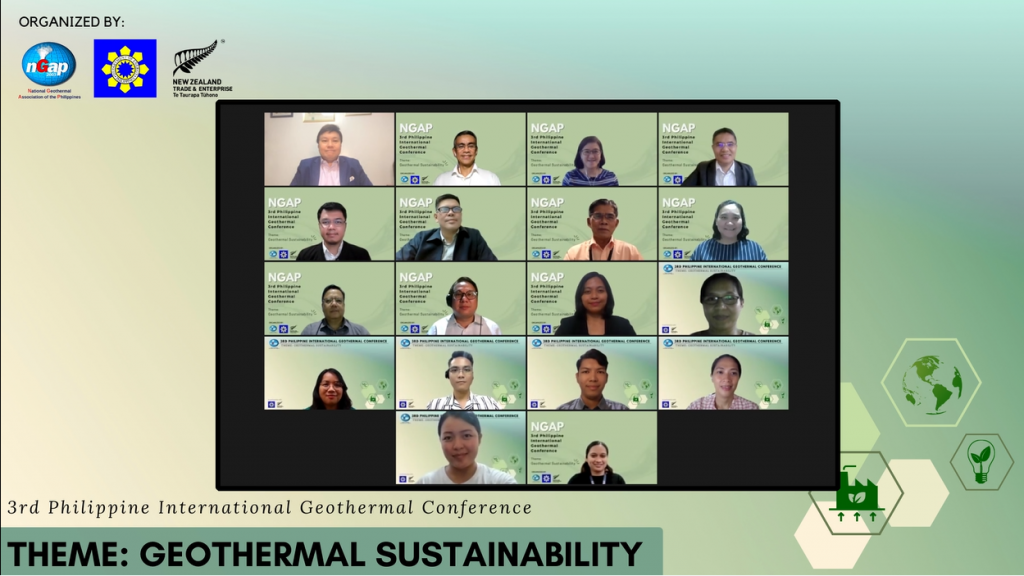
The 3rd Philippine International Geothermal Conference, held virtually, focused on the sustainability of the country’s geothermal resources and derisking the development process.
The 3rd Philippine International Geothermal Conference was held on October 27 to 28, 2022 on a virtual platform. With the theme of “Geothermal Sustainability,” the event was focused on resource sustainability with several talks on scaling mitigation, recharge mechanisms, and binary power plant operations. Of special interest were the policy changes that the Philippine government have been working on, in cooperation with the National Geothermal Association of the Philippines (NGAP), to derisk the development phase of the local geothermal industry.
There were also several presentations on more novel technologies such as closed-loop geothermal by GreenFire Energy, numerical modeling at the exploration stage by Seequent, the use of submersible pumps in high-enthalpy wells by Schlumberger, geothermal direct use case studies by Jacobs, and green hydrogen technology by GNS Science, among others.
Policy changes to accelerate geothermal development
During the opening ceremony, Department of Energy Secretary Raphael Lotilla took note that there has been little addition to the country’s geothermal power generation capacity because of its exclusion from feed-in tariff (FiT) incentives and in the absence of specific programs to encourage development in this industry. However, the DOE also recognizes the value of geothermal in contributing to achieving energy self-reliance and reducing the country’s dependence on imported fossil fuels and exposure to international price fluctuations.
Along these lines, the DOE has set a target of an additional 66 MW of geothermal power generation capacity by 2023. This is envisioned to contribute to the Government’s targets of 35% renewable energy in the country’s power mix by 2030 and 50% by 2040. The RE contribution is currently at 22%.
Recognizing the risks involved in geothermal exploration and test drilling, policy changes have been implemented and are still being developed to help accelerate development in this industry:
- The DOE has raised the percentage of utilization of renewable energy (including geothermal) for on-grid areas from 1% to 2.52% under the Renewable Portfolio Standards (RPS) program. This will help utilize domestic energy sources and encourage more investors to invest in renewable power. The list of renewable energy projects eligible under RPS includes six geothermal projects out of 147 RE projects.
- Geothermal power plants have been included in the list of facilities with preferential dispatch status under the wholesale electricity spot market (WESM). This will help in guaranteeing dispatch of geothermal power to the grid at full available capacities.
- The Competitive Renewable Energy Zones (CREZ) process was launched to identify the most economic RE resource areas to accelerate planning and expansion. The CREZ had initially identified 25 high-quality solar and wind resources in the Philippines, but geothermal resources with potential capacity of 365 MW had also been added to the list.
Strengthening the partnership between the Philippines and New Zealand
In 2017, the Philippines and New Zealand renewed a partnership agreement that sees the two countries cooperating on geothermal and renewable technology development. This partnership was then extended by an amendment to the MOU made in late 2021.
New Zealand Ambassador to the Philippines H.E. Peter Keller emphasized during the event that this was an agreement that was seen by both sides as valuable and generating mutually positive outcomes. In the same way that geothermal is considered a reliable energy source, success in this industry also requires reliable partners, and this is what the two countries have provided to each other.
Keller also provided some insight how each country has to take a different journey to geothermal development. Thus, the Philippine industry needs to work out what is best for their unique situation. Having the right policy framework is important, and Keller agrees that the incentives mentioned by Lotilla make perfect sense in the local setting.
A roadmap for derisking
The DOE is working with the Asian Development Bank (ADB) on a geothermal derisking roadmap to identify, evaluate, and recommend geothermal pre-development risks and strategies. This roadmap will assist the DOE in assessing and prioritizing policies and regulations that can increase or accelerate geothermal development in the Philippines.
Diana Connett from ADB provided more details on the Geothermal Derisking Roadmap during her presentation. The roadmap can be broken down to four sub-points:
- Ensuring that technologies and processes used to explore geothermal resources are updated and current with industry standards;
- Identifying the policy and regulatory opportunities that can unlock the value of geothermal and bring more exploration and pre-development activities online;
- Determining how to mobilize finance for the upfront phase of development, thus mitigating risks; and
- Looking at technologies that help with cost efficiency and risk reduction, and making sure they match with the financing options available.
With a current focus on data collection, the ADB and DOE is now calling for the participation of local geothermal developers to participate in creating the roadmap. As Lotilla said, “this is a project that will require all our collective effort today.” Lotilla mentioned that several countries have benefitted from resource risk mitigations, but the Philippines has unique circumstances that can only be addressed by the local developers.
The final report of the Geothermal Derisking Roadmap is targeted for release by April 2023.