
Zanskar validates AI-based discovery method with drilling at Pumpernickel geothermal site, Nevada

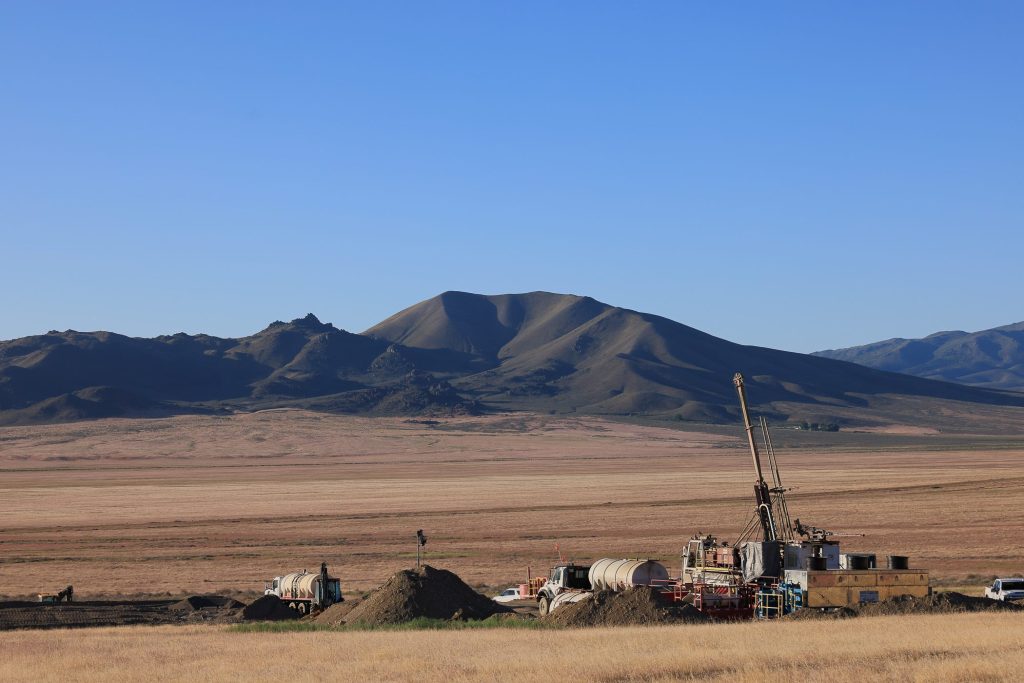
Zanskar has drilled a 137 °C geothermal well at 760 meters depth at the Pumpernickel site in Nevada, further validating their AI-based discovery tools.
Zanskar Geothermal & Minerals, Inc. (Zanskar) has announced its second deep geothermal discovery at the Pumpernickel site in northern Nevada. The discovery comes following the drilling of a geothermal well at the site, encountering a temperature of ~280 °F (~137 °C) at a depth of ~2500 feet (~762 meters).
Zanskar is the first AI-native geothermal company using AI to transform the discovery, assessment, and delivery of geothermal energy. With the resource confirmed via deep drilling, Zanskar will now move to full power development for the Pumpernickel site. The company will drill and construct production and injections wells and power plant, with the first phase of development expected to start delivering electricity to the grid within just three years.
Replicating previous success at a greenfield site
Following their great success at the Lightning Dock geothermal field in New Mexico, Zanskar set out to validate their AI-enabled modeling and targeting tools to explore the geothermal potential at a greenfield site. The Pumpernickel site, located at the Pumpernickel Valley, is described as having sparse data and much higher degree of uncertainty compared to Lightning Dock. Previous attempts at geothermal development at Pumpernickel have been documented through the years.
The stochastic reservoir modeling approach used in Lightning Dock was also used to plan the wells in Pumpernickel. Using the available legacy geologic data sets and shallow exploration wells, a range of geological scenarios was generated, which were the bases for the recommended drilling targets based on maximizing both temperature and permeability. The two best recommendations were used for well targeting.
The first well encountered difficult drilling conditions related to hot and unstable formations. The second well reached the target depth, despite challenges in encountering multiple zones of total circulation loss. Despite difficulties in drilling, all these conditions are indicative of a hot and permeable geothermal system.
Aside from encountering high temperatures at relatively shallow depth, the well also encountered multiple loss zones and artesian flow zones. The thick (>60 ft / 18 m) damage zones correlate to exceptional permeability. Based on heat-in-place calculations at <2 kilometers depth, the site can support a Phase 1 20-MWe development.
Conventional geothermal remains viable
The success at Pumpernickel proves that there are still greenfield sites in the USA that can be developed for power generation, even at sites where previous attempts have failed. The Pumpernickel site also proves that there is still untapped potential at hydrothermal or “conventional” geothermal resources in the USA, thus countering the perception that next-generation solutions like EGS are the only way to grow the industry.
“Our team’s ability to execute with these AI tools and precision drilling is unparalleled,” said Carl Hoiland, Co-founder and CEO at Zanskar. “Our vertically-integrated, AI-native approach to geothermal development is delivering the speed to discovery and speed to development necessary to meet the new paradigm of rapid energy demand growth. These latest deep drilling results only further confirm what we’ve known all along: conventional geothermal resources are far more abundant and bigger than previously believed and are the lowest-cost route to delivering gigawatts of reliable, carbon-free, baseload power at scale.”
Using artificial intelligence, advanced geoscience modeling, and modern data collection methods, Zanskar is aiming to make geothermal resource discovery faster, cheaper, and more scalable. Zanskar has already reduced discovery costs per MW by an order of magnitude compared to inflation-adjusted costs incurred by geothermal’s last major greenfield explorers.
“At Zanskar, our combination of modern, low-cost, field data collection and large compute geospatial models is proving that we can uncover geothermal resources others miss.” said Joel Edwards, Co-founder and CTO at Zanskar. “But claiming a site has power potential is a lot easier than proving it with a drill bit. Pumpernickel is the latest example of when we go where our models tell us, we deliver, and we’re set up to do this over and over again.” .