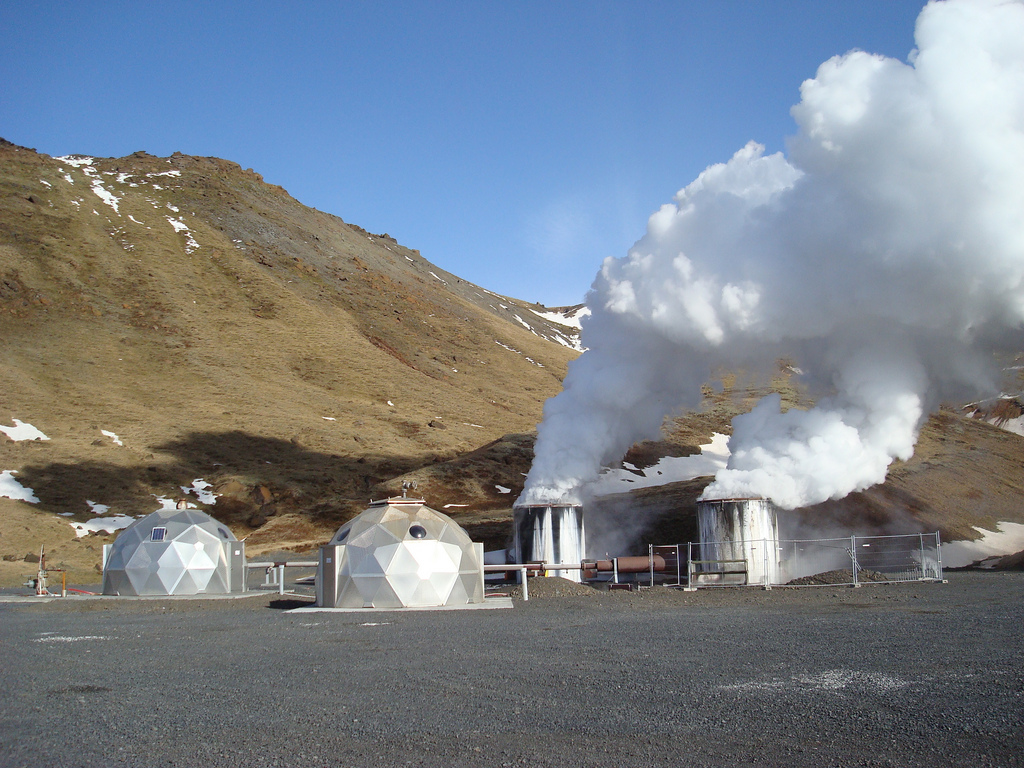
Reported already in September this year, Icelandic energy c0mpany Reykjavik Energy, in collaboration with the University of Iceland and foreign science institutions, has received two grants totalling EUR 12.2 million ($14.3 million), from the European Union to continue to develop an approach to bind carbon dioxide to rock.
“This innovative project began in 2007 and has already led to a significant reduction in CO2 emissions from the Hellisheidi geothermal power plant. Nine PhD students have devoted their papers on carbon “bonding” to basalt stone and work on research in Iceland and other places. Future developments include the development of carbon dioxide binding on the seabed. “This is also reflected in the announcement.
The research on the CarbFix project is led by Dr. Edda Sif Pind Aradóttir.
Since 2007, scientists, in collaboration with the industrial and technical staff of Orkuveita Reykjavíkur and the subsidiaries, ON Power and Veita, have worked on the development and testing of the idea that carbon dioxide that comes up with the geothermal fluid could be mixed with water and be pumped down again. There it is permanently bound in the form of stone. This succeeded. The same method is now used to clean the sulfur hydrogen from the exhaust, and is now about 60% bound up as pellets in the basalt shell layer deep in the ground near the power plant. CarbFix is the name of the original development project with carbon dioxide. SulFix is named as a sulfur project, and one name is called the gas in the rock.
Because the methods developed to bind the geothermal fluid into the basalt layers are watery and that a high basalt layer layer is found on the seabed, scientists in the project are currently focusing on the binding of carbon dioxide to the seabed. This is also stated in a notice.
The carbon dioxide project, called CarbFix, has caused global warming in recent months, an article published in Science, the world’s most prestigious science magazine, in the last year.
Source: Mbl