The Geological Survey and Mining Management Center (GSMC) under the Ministry of Economic Affairs of Taiwan has reported progress on the exploration of the top five high-potential areas for geothermal resources in the country. Multiple exploration technologies were deployed mostly to overcome Taiwan’s geological challenges and ensure high-quality data. Following this, the GSMC will be expanding the exploration campaign to 15 other promising sites.
According to early studies, the top five areas account for about 80% of the total geothermal potential of Taiwan. These areas are as follows:
- Datun Mountain, Taipei
- Lanyang River, Yilan
- Ruisui, Hualien
- Hongye-Wulu, Taitung
- Zhiben-Jinlun
The MOEA had recently prioritized development of the Lanyang River geothermal area, citing its advantages both in terms of the quality of resources and the ease of accessibility and connectivity.
The GSMC has provided some details on the initial results of the geothermal exploration campaign. A 245 °C resource has been detected at the igneous-sedimentary boundary in the Macao area of the Datun Mountain. A 175 °C upwelling channel has been found in the Ruisui area. Temperatures of 150 °C have been measured at the Haiduan and Yanping areas in Taitung. The results of the surveys will be made public on the Geothermal Exploration Information Platform, upholding the value of transparency and helping to spread awareness and support for geothermal.
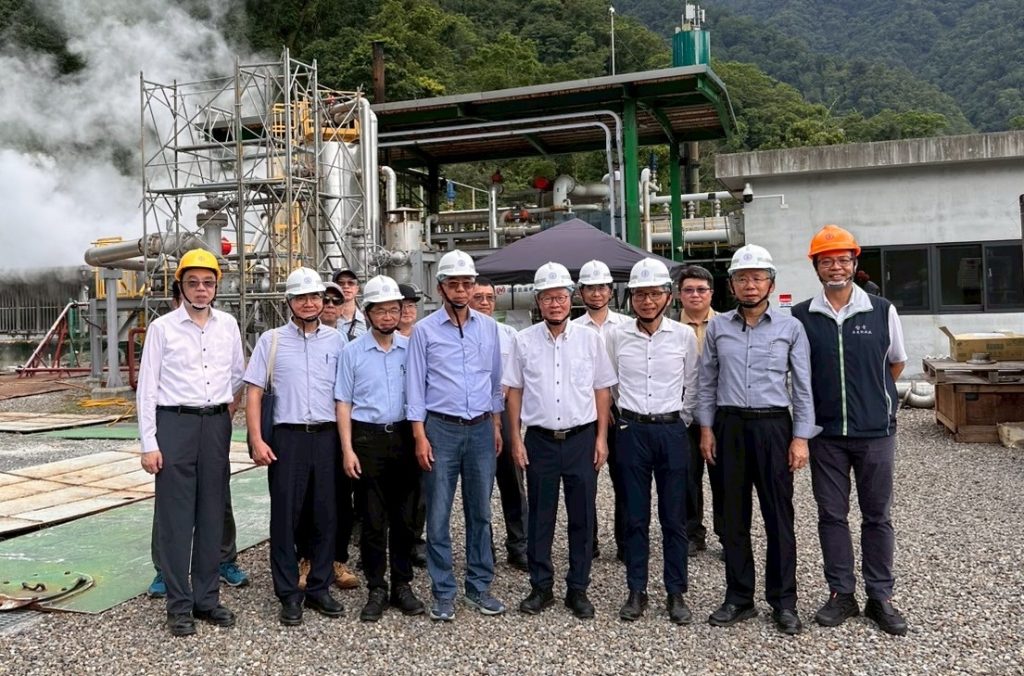
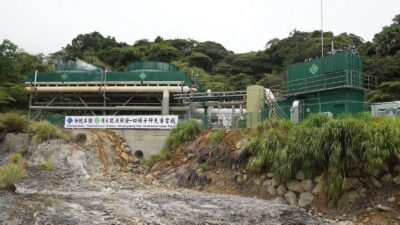
The Government of Taiwan has expressed strong support for geothermal development. For instance, the Executive Yuan Councilor Chen Jinde recently visited the drilling site of the CPC Corporationa’s Yuanshan No. 1 deep geothermal well in Yilan County, as well as Taipower’s Yilan Renze geothermal power plant.
New exploration technologies
The mountainous terrain of Taiwan pose significant challenges to geothermal exploration. For this reason, the GSMC has expanded their exploration methods from traditional ground-based techniques to airborne gravity and magnetic surveys. Recently, the Center introduced Canada’s MobileMT airborne magnetotelluric technology for the first time, conducting surveys in the middle and upper reaches of the Lanyang River. This technology effectively analyzes the distribution and pathways of heat sources within one kilometer underground.
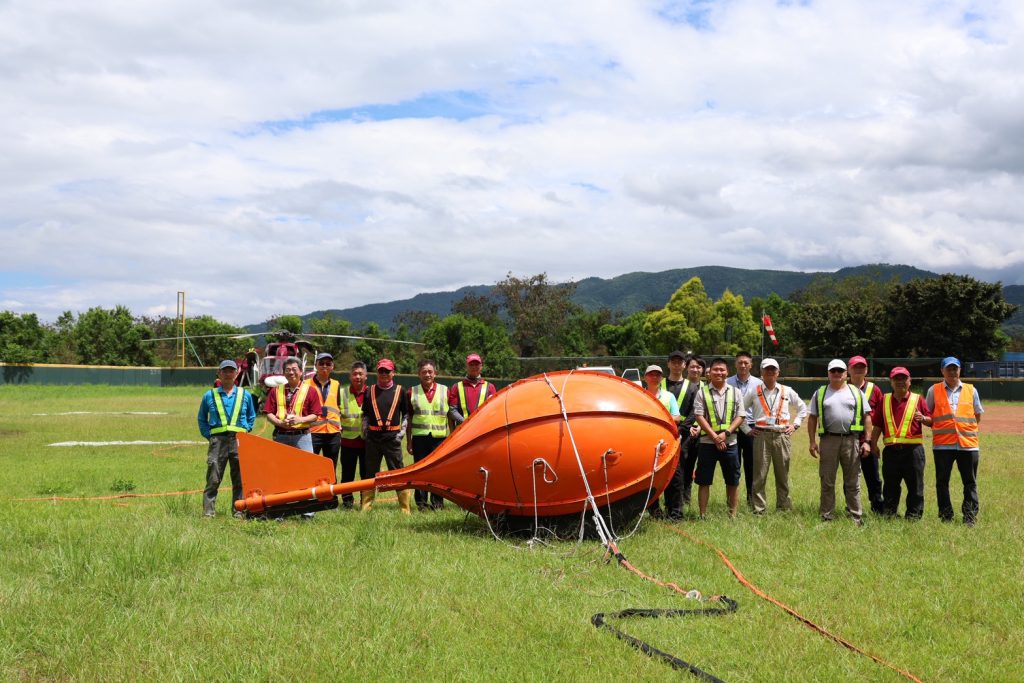
The Center is also collaborating with industry, academia, and research to gradually delineate deep heat reservoir structures through geological surveys, physical exploration, and structural analysis. This “three-dimensional exploration” strategy, combining air and land exploration, improves exploration accuracy and lays the foundation for further geothermal assessment in Taiwan.
Source: MOEA