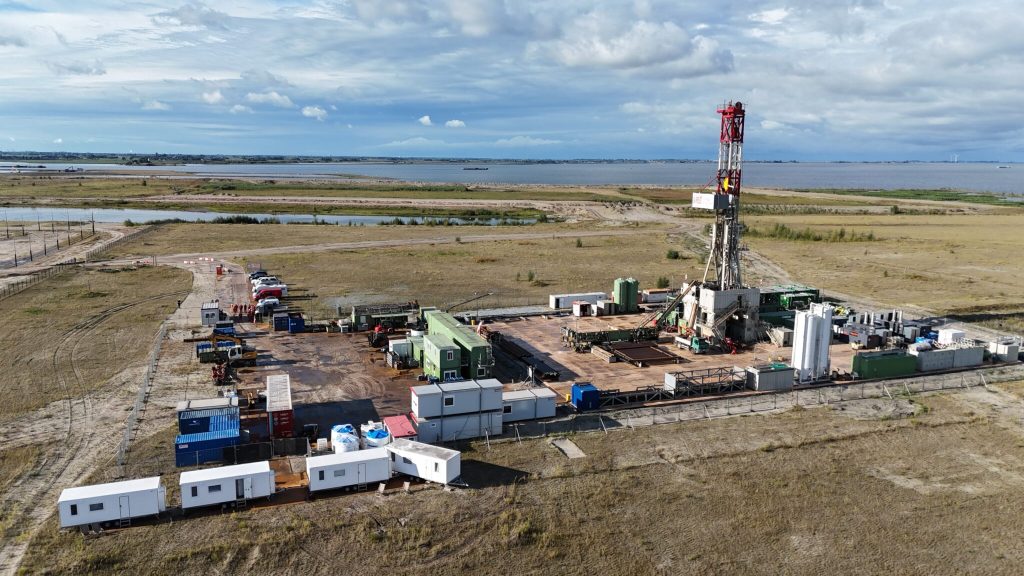
Drilling and testing of a geothermal research well on Strandeiland in Amsterdam, Netherlands has been officially completed. The site has now been cleared and restored to its original state. The research team has completed all the planned data collection activities and are satisfied with the outcome.
Research drilling at Strandeiland is part of the SCAN program, which seeks to collect subsurface information around the Netherlands to determine sites suitable for geothermal energy extraction. The well reached the target depth of 1963 meters on October 2025. The well was able to penetrate through two formations of interest:
- The Schlochteren formation (part of the Upper Rotliegend group), a 152-meter-thick sandstone layer encountered between 1741 and 1893 meters depth. Preliminary interpretation of test results indicate a permeability of 6 to 6.5 Dm for this formation.
- The shallower Breda formation has a permeability of 24 to 30 Dm, making it an attractive layer for high-temperature storage.
Water samples were collected from the well, as well as 90 meters of core samples from the Schlochteren formation.
All research results will be made available on NLOG.nl within the next six months. The results can then be used by municipalities, provinces, and companies to implement geothermal projects. The SCAN program is only conducting research and will not initiate any geothermal projects. Further research is needed to determine the economic feasibility of future geothermal projects in this region.