Berlin’s Senate Department for Mobility, Transport, Climate Protection and the Environment has reported early positive indications from initial geothermal survey work carried out within the city. According to a recent statement by the city administration, preliminary investigations suggest that subsurface conditions may be suitable for expanded geothermal assessment, particularly in support of future heat supply options.
The findings form part of Berlin’s broader effort to evaluate geothermal energy as a potential contributor to its long-term decarbonisation strategy for district heating.
Scaling up surveys through public procurement
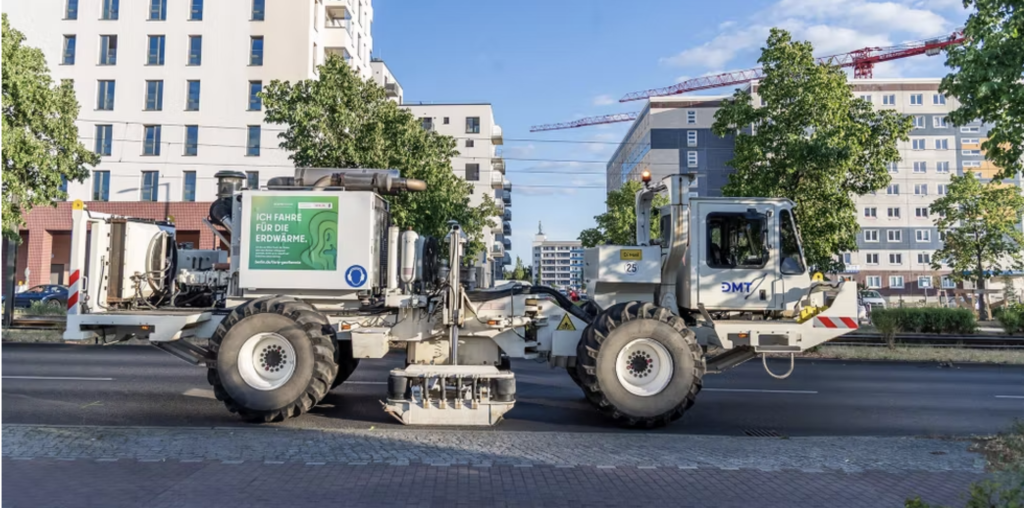
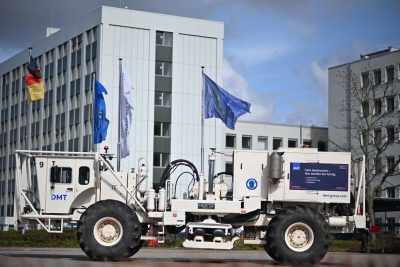
Building on the initial work, Berlin initiated a public procurement process for more extensive geothermal surveys (3D Seismik). The tender is intended to support larger-scale subsurface investigations, including data acquisition and analysis, to better characterise geothermal potential across selected urban areas.
City authorities have framed the next phase as exploratory rather than project-specific, with the aim of improving the overall geological data base available for future planning and decision-making.
Tender timeline remains subject to clarification
While the Senate’s press communication refers to an open tender process extending into February 2026, procurement records published through Germany’s public tender platforms indicate that the submission deadline may have fallen earlier, toward the end of January 2026.
Given the discrepancy between public communications and procurement documentation, the precise status and timing of the tender process cannot be confirmed based on publicly available information alone.
Urban geothermal exploration in context
Geothermal exploration in dense urban environments such as Berlin presents both opportunities and challenges. Positive early survey signals are a necessary first step, but further work is typically required to assess reservoir depth, temperature, permeability, and compatibility with existing infrastructure.
Berlin’s approach reflects a growing trend among European cities to first invest in publicly funded subsurface data acquisition, reducing geological uncertainty ahead of potential project development by utilities or private-sector partners.
Next steps depend on survey outcomes
At this stage, no specific geothermal projects, capacities, or development timelines have been announced. The city has positioned the current activities as preparatory work that could inform future decisions on geothermal heat deployment, particularly in the context of transforming Berlin’s district heating systems.
Parallel tender for geothermal utilisation rights
In parallel to the survey-related procurement, Berlin has also launched several tenders linked to the future utilisation of deep geothermal resources in a license area held by the city. One such tender, covering sub-exploration area 1-2, concerns a concession for the transfer of a mining exploration permit for deep geothermal energy, with the stated expectation that the permit could later support the construction of a geothermal utilisation facility for heat or power generation. One of the tendered “concessions” can be found here. According to the tender documentation, the application deadline for this concession was set for early February 2026, with the permit period envisaged to run from mid-2026 to mid-2030. Similar tenders have been issued for a total of five defined sub-exploration areas across Berlin, indicating that the city is progressing not only with data acquisition but also with preparatory steps that could enable future project development, subject to permitting and further technical assessment.
ThinkGeoEnergy will continue to monitor developments as additional information on survey results and procurement outcomes becomes available.
Source: Our German partner website TiefeGeothermie