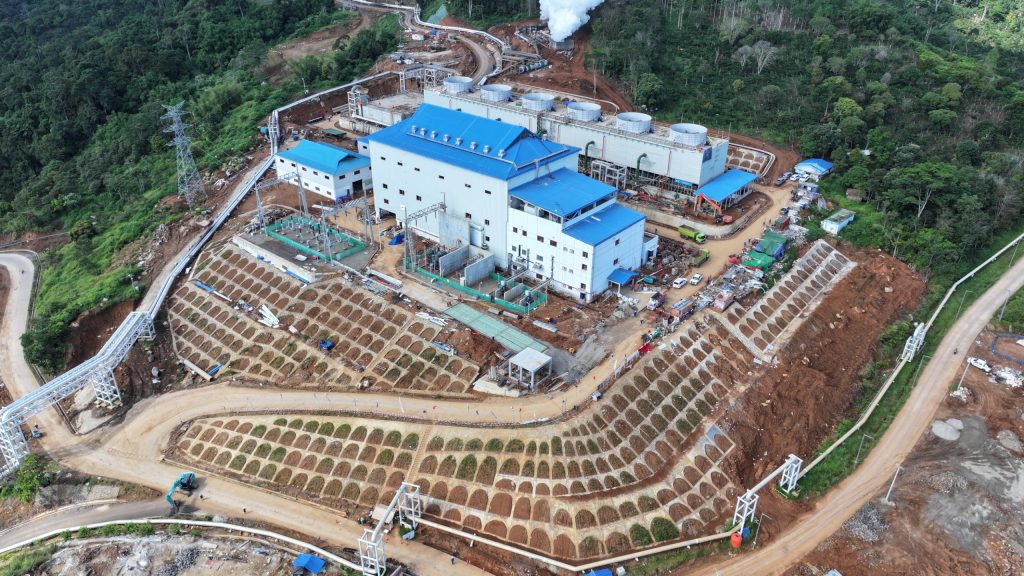
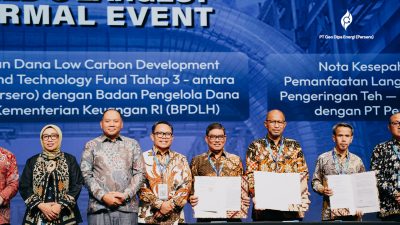
Four planned geothermal projects under PT Pertamina Geothermal Energy (PGEO) in Indonesia have been included in the list of projects in the 2025-2029 Blue Book of the Ministry of National Development Planning (PPN / Bappenas), thus making them eligible to obtain foreign funding through concessional loan schemes.
The geothermal projects included in the blue book, as well as their project capital expenditure figures, are:
- Lumut Balai Unit 3 (USD 305 million)
- Lumut Balai Unit 4 (USD 290 million)
- Gunung Tiga / Ulubelu Extension 1 (USD 227 million)
- Lahendong Units 7/8 & Binary (USD 274 million)
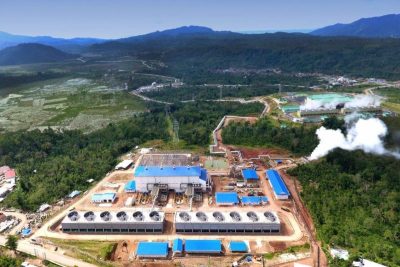
These projects are envisioned to add up to 215 MW of additional geothermal power generation capacity from 2029 to 2032. The projects are also part of PGEO’s roadmap towards the goal of developing 3 GW of geothermal potential. Earlier this year, PGEO put Unit 2 of the Lumut Balai geothermal power plant online in Sumatra, adding 55 MW of capacity to the company’s geothermal portfolio.
Edwil Suzani, Exploration & Development Director of PGEO, added that the four geothermal projects are eligible to get funding through an indicative concession loan scheme with a value of up to USD 613 million. The multilateral institutions that may provide funding for the projects include The World Bank, Asian Development Bank (ADB), Japan Bank for International Cooperation (JBIC), and Japan International Cooperation Agency (JICA). These institutions have already had extensive history of funding geothermal projects in Indonesia, with Dieng and Patuha as some of the more recent examples.
PGEO will thus enter into negotiations with these institutions to determine the financing structure, interest rate, tenor, and technical and environmental requirements that will be deemed most optimal for the parties involved.
The Director further explained that the Subsidiary Loan Agreement (SLA) scheme is a low-cost, long-term financing tool offered by multilateral institutions to the Indonesian Government. It can help improve a project’s economic feasibility by increasing the projects internal rate of return by 1% to 3%.
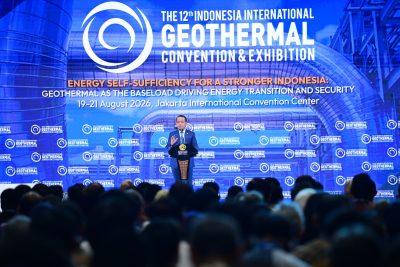
“The development of these projects not only increases the renewable energy mix but also creates multiplier effects for communities surrounding the operational areas, from creating new jobs to growing local economic activity,” added Edwil in an official statement.
Sources: Bisnis.com