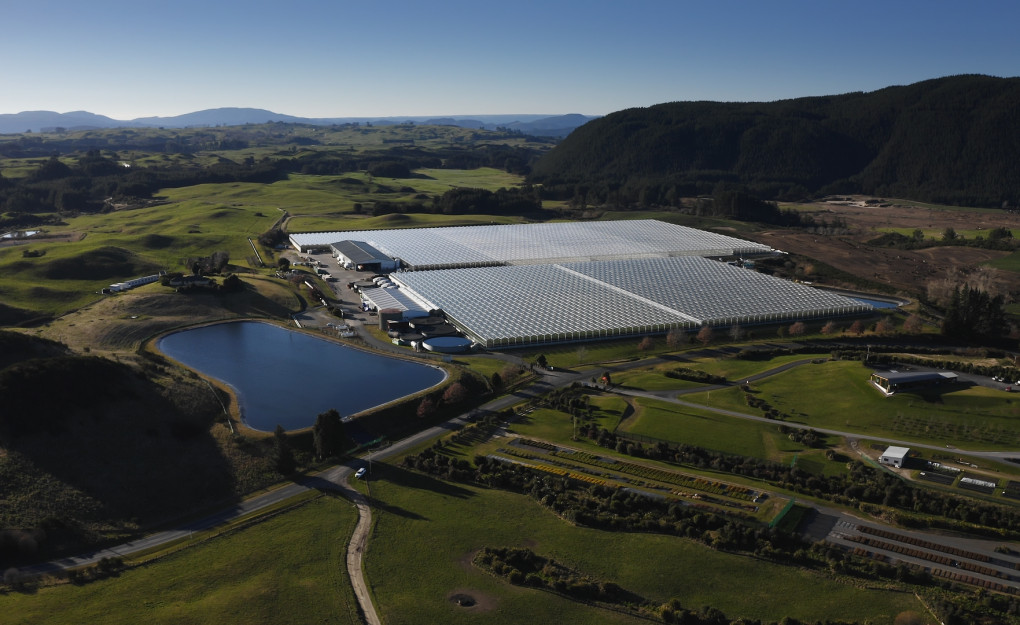
A free online calculator has been launched to help crop growers operating glasshouses in New Zealand evaluate the technical and economic feasibility of switching from fossil fuel heating to geothermal heating. The online tool was developed by a team from Earth Sciences New Zealand (Earth Sciences NZ) and GeoExchange NZ, with the support of the Ministry for Primary Industries’ Sustainable Food and Fibre Futures fund and Vegetables NZ and Tomatoes NZ.
Click here to open the Geothermal for Glasshouses Calculator.
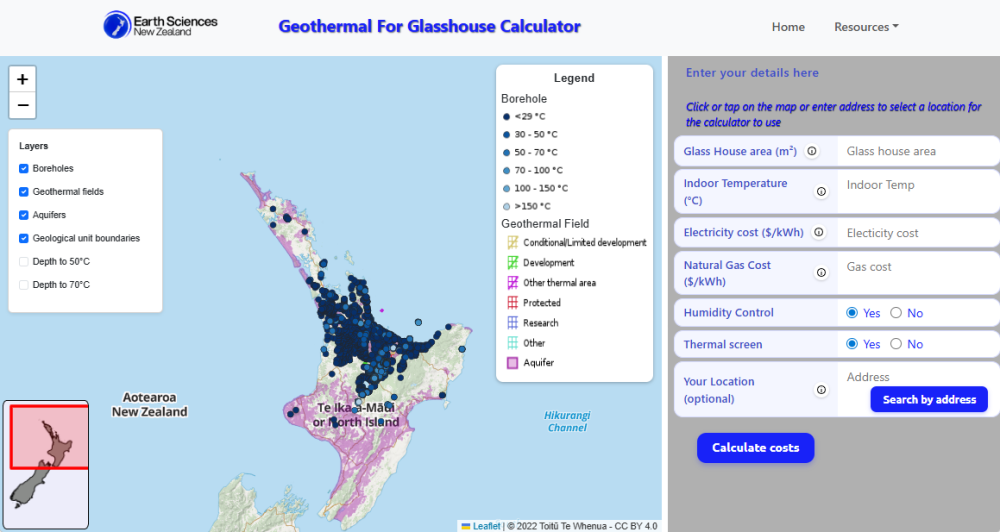
First announced in early 2025, the tool has now already been tested by growers to explore potential heating demand, fuel displacement, emissions reductions, and indicative cost considerations should they switch to geothermal.
“Energy costs are currently about 40% of a grower’s overhead, heating is rapidly becoming one of the sector’s largest and most volatile operating costs. Keeping the heating on is seriously impacting our growers’ ability to keep operating,” said Dinah Cohen, General Manager of Covered Cropping NZ.
“While many growers currently have their fuel supply locked in through contracts, the real risk is what happens when those contracts run out, and remaining on gas could become unaffordable.”
“Simply, there is no more efficient way to produce heat than by starting with pre-existing heat. Using the geothermal heat directly in our earth’s crust offers a 24/7, low-emissions heating alternative that is more energy efficient than fossil-fuel burners and electric heating,” added Dr Anya Seward from Earth Sciences NZ. “This tool is about giving growers practical, science?based insights so they can see what geothermal heating could mean for their business and for the resilience of the wider food system.”
Broader geothermal potential in New Zealand
While geothermal energy is often associated with known hotspots like Taup? and Rotorua, the developers of the tool stress that its potential is far broader. As Dr Seward explains, low-temperature geothermal heat is readily available across much of New Zealand. This type of geothermal resource is suitable for many applications that require temperatures below 100 °C, including space and water heating, food processing, and concrete curing.
However, Dr Seward emphasizes that nationwide geothermal datasets and tools like the Geothermal for Glasshouses Calculator are needed to de-risk development for potential end users. This could involve regionally distribute test bores and pilot projects. This type of early investment, Dr Seward argues, has been key in scaling greenhouse geoheat appplications in other countries, such as in the Netherlands.
“We’re seeing encouraging signals in the ?Geothermal Strategy for New Zealand the government released last month. We have a long way to go, but the opportunity seems worth it,” concluded Dr Seward.
Source: Earth Sciences New Zealand