Europe’s push to decarbonise heating is gathering pace, and geothermal is starting to take a clearer role in that transition. With the Aarhus project now operating on schedule and budget, Innargi has moved from development into long-term delivery. ThinkGeoEnergy spoke with CEO Samir Abboud about the project and its start of operations, the company’s learning curve, and what Aarhus signals for geothermal district heating in Denmark, Poland, and beyond.
The conversation comes at a time when district heating operators, policymakers, and investors are reassessing how geothermal can strengthen energy security while aligning with Europe’s climate goals.
Aarhus commissioning points to maturing project models
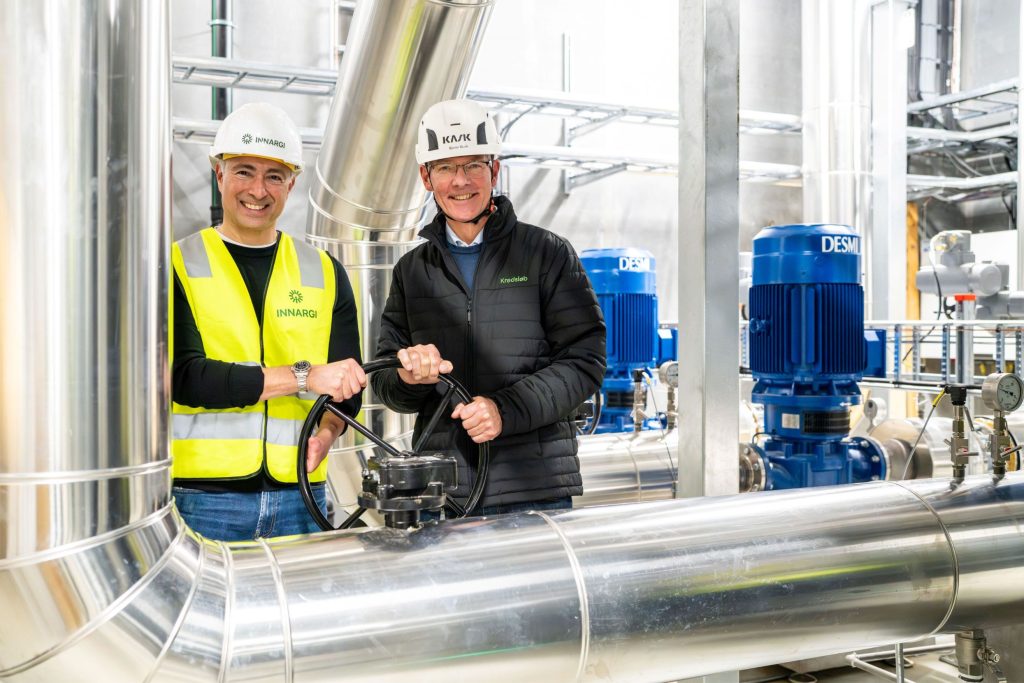
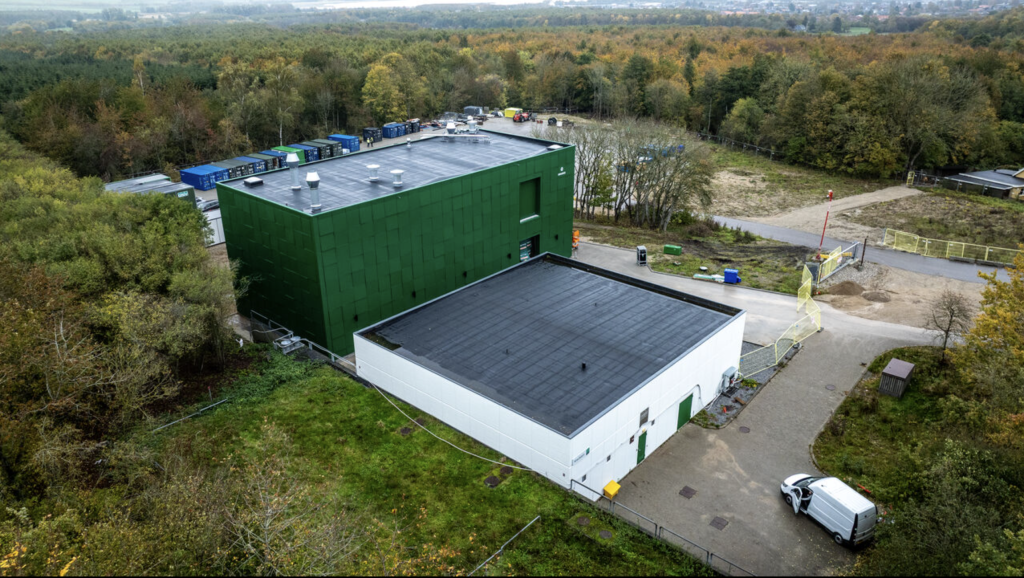
Innargi signed the agreement with Kredsløb, Aarhus’ district heating utility, in 2022. Three years later, heat is flowing into the network as planned. Abboud describes the early operational period as a confirmation that large geothermal systems can deliver predictable output when technology, subsurface knowledge, and utility integration align.
He notes that optimisation continued throughout development. “After drilling the first exploration wells, we adapted the project based on what we learned about Aarhus’ subsurface. We reduced the number of planned sites from seven to three while still delivering the same amount of heat,” he says. Lower network temperatures and progress in heat pump technology were central to that decision.
Smooth integration with the utility
Asked about commissioning challenges, Abboud keeps the answer short. “So far, it has been a remarkably smooth process, knock on wood.” For district heating operators watching the project, this performance will likely be an important reference point for replicability.
What Aarhus means for Europe
Abboud emphasises that geothermal complements the wider electrification of district heating. “The future of district heating is electrification, and geothermal plays a vital role in using wind and solar power as efficiently as possible,” he says. Aarhus is moving away from fossil fuels and imported biomass, relying instead on a mix that includes waste-to-energy with carbon capture, geothermal, local biomass, heat pumps, and direct electrification. Abboud expects the shift to support lower consumer prices.
Building internal capability for multi-well systems
Innargi’s roots in oil and gas shape its approach to subsurface analysis and drilling. But Abboud stresses that technical expertise alone is not enough. Teams also manage municipal permitting, district heating integration, and operations in dense urban areas.
“It takes skilled people to navigate complex municipal permitting processes, a deep understanding of district heating, and strong stakeholder management. Operating in cities with drilling rigs and construction requires handling a complex landscape of neighbours and local interests,” he says.
Denmark and Poland lead Innargi’s pipeline
Innargi is currently active in Denmark, Poland, and Germany. For now, Denmark and Poland are moving the fastest. “We see the strongest traction in Denmark and Poland with forward-looking partners committed to the green transition and eager to work with us to overcome barriers to large-scale geothermal district heating,” Abboud says.
Conditions for productive utility partnerships
Long-term contracting and clear roles between developers and utilities are essential. Abboud highlights the Danish model, where subsurface and plant performance risk sits with the geothermal developer, while network responsibility stays with the district heating company. “No private investor will commit capital without a long-term contract. Conversely, history shows that district heating companies struggle to deliver geothermal projects alone,” he explains and adds that he is optimistic that workable models can be found.
Policy certainty and the importance of staying the course
Abboud emphasises that stable and predictable regulation remains essential for attracting long-term capital to geothermal heating. Fully implementing the Green Deal, including ETS2, and maintaining a clear climate framework toward 2040 are, in his view, necessary to keep investor confidence. “If ambition falters or the Green Deal is rolled back, investors will lose confidence and redirect capital elsewhere. Without investment, progress stalls,” he says.
For Abboud, Europe’s competitiveness also depends on using more of its own energy resources. Geothermal remains underused, despite the potential to support electrification and reduce exposure to imported fuels. He welcomes the European Commission’s commitment to developing a Heating and Cooling Strategy and a Geothermal Action Plan. He also notes the role of Energy Commissioner Dan Jørgensen, whose work as Denmark’s energy minister helped enable projects such as Aarhus. “Now he can help scale this success across Europe,” Abboud says.
He highlights two further priorities for policy. First, broader deployment of district heating, pointing to Aalborg University’s recommendation to increase coverage from 13 percent to 55 percent as the most cost-efficient pathway to decarbonise heating. Second, easier access to subsurface data and faster permitting, both of which remain barriers for cities considering geothermal heat.
When public-private cooperation slows down
According to Abboud, unclear project models or dependence on shifting subsidies tend to create delays. He notes that Germany’s stop-start dynamics sometimes lead to projects being split into smaller packages, adding cost and complexity. Variations of the Danish model, he argues, can reduce risk for taxpayers while giving developers the contractual certainty needed to invest.
Risk allocation and the Graz discussion
We wanted to hear on his opinion on the recent news of a project stop in Graz in Austria announced this week. Without commenting on specific companies, Abboud says that geothermal developers with deep subsurface expertise are best positioned to manage geological risk. District heating companies, in turn, should keep control of the network and customer relationships. “If we can design models that reflect these realities, institutional investors will find geothermal attractive. And I believe we are close to achieving this in Denmark and Poland,” he says.
Interview conclusion
The Aarhus project is emerging as a reference case for large-scale geothermal heat in Europe. The early operational performance, the integrated role with heat pumps and network flexibility, and a clear risk-sharing model suggest that geothermal can support Europe’s shift toward secure, domestic, and electrified district heating. For municipalities and utilities exploring geothermal, Abboud’s message is consistent: clarity, long-term cooperation, and policy stability are the deciding factors.
See additional coverage on Innargi on our site here.