The Ministry of New and Renewable Energy (MNRE) of India has published the country’s first National Policy on Geothermal Energy, setting an initial framework for the exploration and development of its geothermal resources.
The complete text of the National Policy on Geothermal Energy can be accessed via this link.
The publication of the policy follows a period of extensive consultation with stakeholders, as well as the establishment of a Task Force in 2024 to review the draft of the policy. The task force was composed mostly of representatives from various research institutes around India, with a few industry players.
Policy goals
The new geothermal policy sets a vision of geothermal energy being one of the major pillars of India’s renewable energy landscape, and thus contributing greatly to the nation’s 2070 Net Zero Goal. In more specific terms, the goals of the policy include:
- Improvement of research capabilities on geothermal energy including in the areas of exploration, drilling, reservoir management, power generation, and direct use applications
- Collaboration between local Ministries, research institutes, and international geothermal development bodies to incorporate global best practices in exploration, resource assessment, and technology adoption
- Deployment of geothermal heating and cooling solutions for buildings, agriculture, and industries
- Promotion of advanced geothermal exploration involving deep and multilateral drilling and repurposing of abandoned wells
- Establishment of a public-private ecosystem for long-term geothermal development
- Capacity building and knowledge sharing
Potential geothermal sites
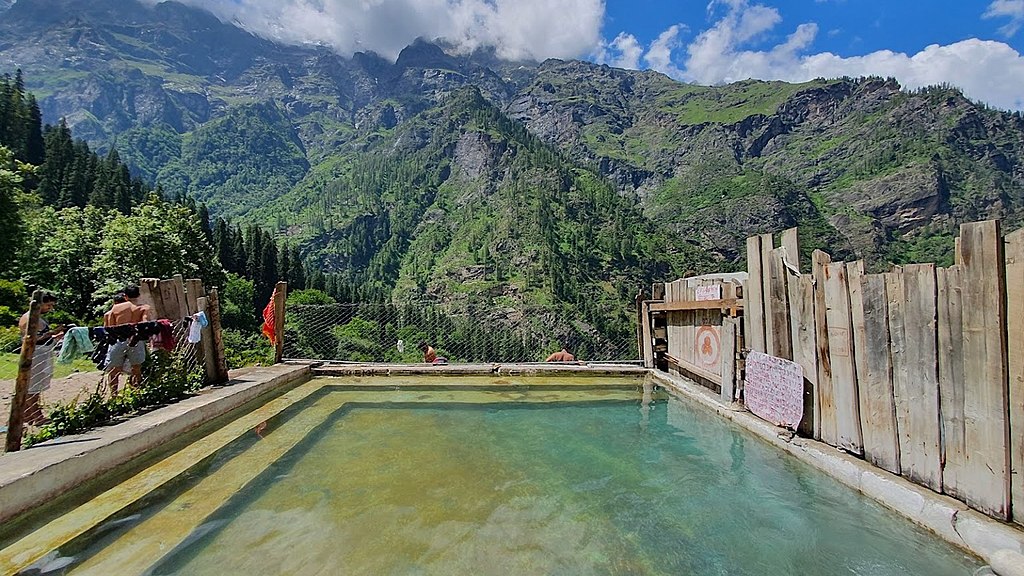
The Geological Survey of India has already identified 381 hot springs in the country with surface temperatures ranging from 35°C to 89°C. Most of the geothermal resources in India fall within the medium to low heat enthalpy zone, with resource temperatures of 100°C to 180°C. There are a few higher-temperature sites, particularly within the Himalayan regions.
Thus, the GSI has identified 10 geothermal provinces as follows:
- Himalayan Geothermal Province;
- Naga-Lusai;
- Andaman Nicobar Islands;
- Son-Narmada Tapi (SONATA);
- West Coast;
- Cambay Graben;
- Aravalli;
- Mahanadi;
- Godavari;
- South India Cratonic.
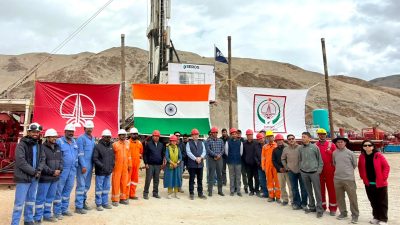
Moreover, the GSI has identified 16 geothermal energy sites, which includes the Puga Valley in Ladakh where drilling is already ongoing.
To facilitate knowledge sharing, the Ministry shall create a geothermal resource data repository which will also include oil and gas industry data on abandoned and existing oil wells, mineral identification, and drilling expertise. The Directorate General of Hydrocarbons (DGH) Data Repository may be made available for utilization by eligible operators or developers for geothermal prospective analysis.
Development models
The scope of the policy includes a wide spectrum of geothermal applications, from power production to ground source heat pump applications, direct use, and the extraction of minerals and other byproducts.
Currently, 100% foreign direct investment is allowed in India for renewables. There will be preference given to indigenous technologies to reduce dependency on importation and encourage local innovation. The MNRE shall also prioritize the conversion of existing abandoned oil and gas wells for geothermal utilization through collaboration with the Ministry of Petroleum and Natural Gas (MoPNG), the Directorate General of Hydrocarbons (DGH), and oil companies.
Joint ventures are welcome, particularly those between geothermal developers and oil and gas and mineral companies. The government may explore different financing mechanisms such as government-funded exploration, funding from donor organizations, or long-term loans from private and public financial institutions. Fiscal mechanism can also be considered to support geothermal development, such as import tax exemptions, tax holidays on geothermal projects, or property tax exemptions.
Concessions and permitting
Project developers may approach state governments for the allocation of potential geothermal zones, for which the appropriate government may grant exploration permits. The Ministry may coordinate with the MoPNG in case of overlap with existing oil fields.
State governments may also allocate possible geothermal sites for exploration for 3 years, with possible extension of 2 years (in case of seasonal challenges, such as in the Himalayas region). The sites can then be allocated for further development and exploitation for up to 30 years, with provisional extension.
To support the timely implementation of these projects, the Ministry shall facilitate a streamlined single-window support system. States shall designate an agency to facilitate the granting of permits and monitor the implementation of geothermal projects. This agency will act as a single window for all mandatory and statutory clearances required for setting up a geothermal project.