With Indonesia and the Philippines as neighboring countries, one would justifiably assume that there is geothermal potential in Malaysia. Studies have shown this to be true, but the sector has so far not managed to develop at a meaningful scale. This may not be the case for long. Work is now ongoing from the academic and industrial sectors in Malaysia towards the goal of a first-ever geothermal power plant in the country.
As part of these efforts, Malaysia will be hosting its first Malaysia International Geothermal Conference at the Teknopolis Building of the Universiti Kebangsaan Malaysia in Selangor on 23-25 September 2024. Registration for the conference is still open.
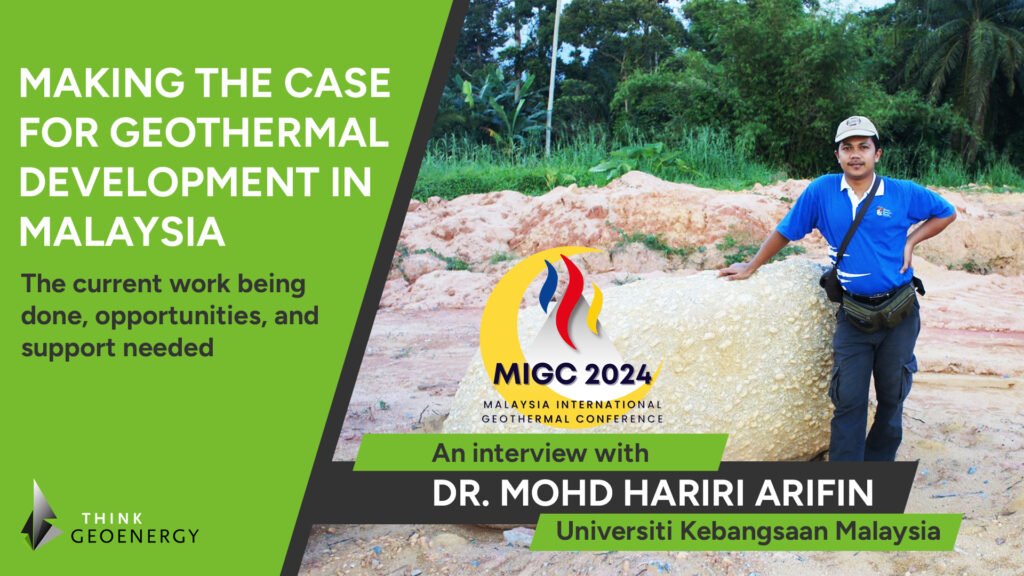
To learn more about the current work on geothermal in Malaysia, its future direction, and the support that the sector needs, we talked with Dr. Mohd Hariri Arifin from the Department of Earth Sciences and Environment at UKM.
Can you tell us about the status of geothermal in Malaysia and the results of studies that have been done so far?
We have about 100 geothermal locations in Malaysia – more than 60 in Peninsular Malaysia, and more than 20 in the Sabah and Sarawak regions in East Malaysia. Majority of the geothermal sites in Malaysia are non-volcanic in origin, except for the sites in Sabah that are related to the Philippine volcano system. This characterization gives us a general information about geothermal in Malaysia and its potential.
Past studies on geothermal have been undertaken by the Sustainable Energy Development Authority (SEDA) as well as the Department of Mineral and Geoscience (JMG). Some of these studies have been abandoned either because of a lack of budget or a decrease in interest from the government sector.
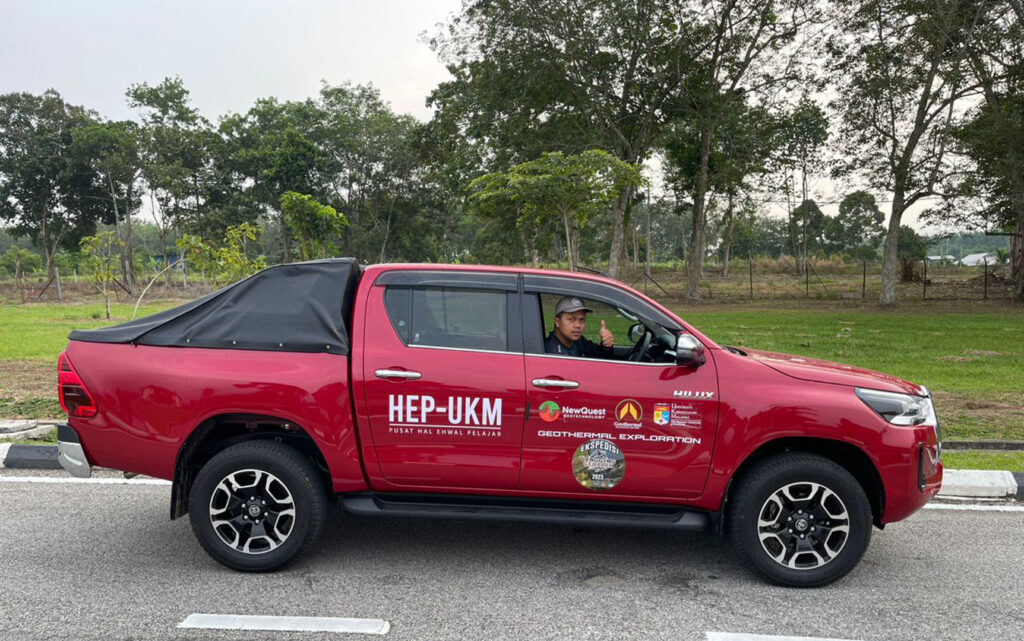
Right now, we are working under a contract with private partners to conduct studies and reevaluate previous results from the Ulu Slim site (north of Kuala Lumpur) to increase the confidence level on its potential capacity. So now, we are very confident to go for the second phase of the project, which is drilling. I believe that, based on our findings, implementing a Proof of Concept project can generate much more interest for geothermal in Malaysia and it will be easier to convince people that we can generate electricity from our geothermal resources.
What is the difference between the current efforts for exploration and development and those in the past that have not been successful?
The past geothermal project planned for development in Sabah was not abandoned due to technical or geological reasons. They had already drilled to 1.5 kilometers depth there and encountered bottom hole temperatures of around 200 °C. However, there were other reasons that contributed to the project being abandoned, some of which were budget-related.
The current studies are being led by some private partners and are being funded with their allocation to support Net Zero efforts. In the coming days, representatives from these partners will be visiting our geothermal labs in our university to discuss more about geothermal. We just continue with our work of letting more people know and educating them about geothermal in Malaysia.
Considering the locations and temperatures of geothermal in Malaysia, what applications are you considering? Is there an existing power distribution infrastructure to complement your work?
Most of the hot springs are located in countryside, quite far from the city. However, the hot springs that we are investigating right now in Perak is very near to Tanjong Malim, where we have our national car factory or the so-called “Proton City.” We plan to generate electricity from geothermal in Ulu Slim then supply it to Proton City which is only about 10 kilometers away.
Other geothermal sites being explored, like those in Sabah, are not located far from the main power distribution lines, so it would be easy to connect.
Beyond the power distribution infrastructure, what we lack now are the guidelines for geothermal power development and generation. We currently do not have a Feed-In Tariff (FIT) for electricity from geothermal sources, as well as regulations on conducting Environmental Impact Assessments (EIA) and Social Impact Studies. This is something we continue to negotiate for with SEDA and other related parties. We need this framework in place so that we can encourage the private sector to participate and invest on geothermal projects.
Right now, we are working with UKM Pakarunding to establish guidelines for EIA and SIA. These will be ready by the end of 2024.
Is geothermal part of Malaysia’s strategies for climate change mitigation or emissions reduction goals?
The Malaysian government is currently just focusing on other renewable energies that are already proven and have had success in the past. There are already many success stories for solar energy deployment and mini hydropower in Malaysia.
Geothermal is still quite new for us and we do not have clear guidelines yet for its development. This is why we keep proposing geothermal projects and educating others about the potential for geothermal. We are looking for collaborations with those who want to be pioneers for geothermal in Malaysia. We are not good in everything, so we are very open to others with the expertise, not just in the technical aspects, but also in securing funding and dealing with government and related parties.
What is the status of in-country skills and capabilities to facilitate geothermal development in Malaysia?
In terms of local expertise, I believe we still need maybe five years at least before Malaysia can be fully ready for geothermal. For now, we are building relationships with experts in Indonesia and Thailand so that they can transfer their knowledge and help us prepare within that time frame.
Some of our private partners also mentioned that they want to help make sure that local universities can produce future leaders in geothermal. That means we should have geologists, geochemists, and geophysicists, and later on chemical, electrical, and mechanical engineers that can help develop, operate, and maintain geothermal projects.
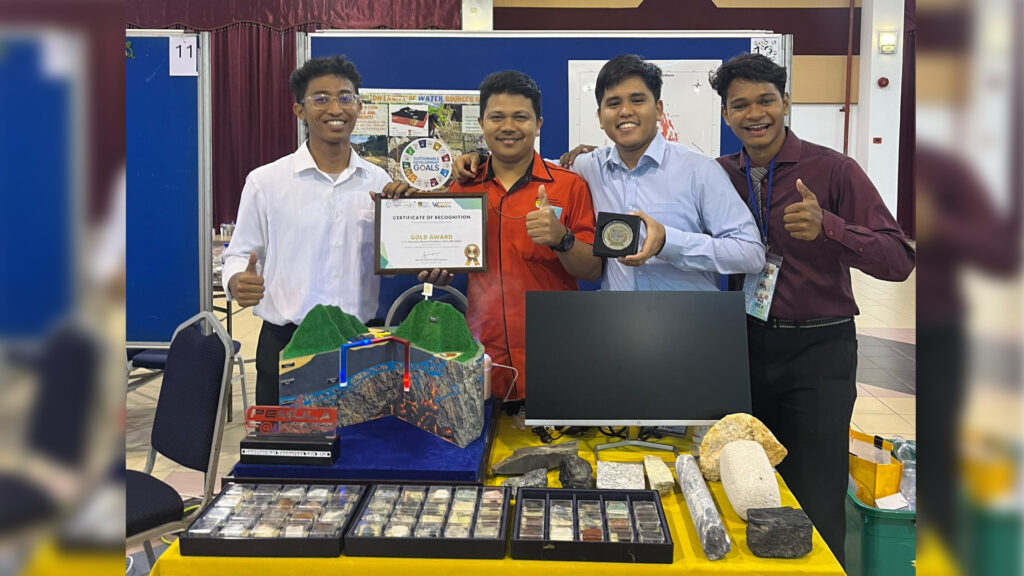
There have also been talks about developing in-country technologies to help develop the geothermal industry, such as in drilling or turbine manufacture. The economics of this is more complicated and will likely require a larger investment. Not many companies are open to having discussions about geothermal, so that remains a major challenge for us.
What other forms of support does the Malaysian geothermal sector need?
We are now trying to set up a Malaysian Geothermal Association (MyGA) to create representation and consolidate the efforts of the local geothermal industry. This will also make it easier for us to work with other international groups like the International Geothermal Association (IGA).
Right now, our focus is on developing the first Proof of Concept project for geothermal in Malaysia. A contingent from Malaysia recently visited Iceland for the Iceland Geothermal Conference where we got recommendations for technology suppliers and service providers that can help us. Our plan is to deploy a small-scale, modular geothermal power plant in one of our top sites in Malaysia, like in Perak. If we can prove that geothermal electricity can be generated there, then it will be easier to move to another location and develop a project there.
We are also in the process of requesting for funding support from international agencies like the World Bank or JICA. We do not have much experience in this area, so we could use some help in getting connected with the right people. Again, this is all still learning process for us, but we are up to the challenge.
How have locals reacted to the prospect of geothermal development? What benefits do you think can geothermal deliver to the local communities in Malaysia?
We have presented several times about geothermal in Malaysia in international and local conferences. However, I want to focus on the local front as it is important for us that locals know the value of hot springs and this energy can be utilized. There are many hot springs in Malaysia. In some cases, people have hot springs in their backyards but do not know how valuable these springs are.
If we want to generate electricity from geothermal, then we will need to drill a deep well and invest a huge amount. We want to emphasize that this may not be the case for direct use applications of geothermal. We only need to look at our nearby neighbors like Thailand, where geothermal heat is being used to dry tea leaves or provide conditions for fish breeding.
I just came from one meeting where we talked about how geothermal clay can be used to make skincare or bath products, like in Blue Lagoon in Iceland. It is already internationally known that such minerals from geothermal deposits can have health benefits. We have engaged with a local expert in chemical engineering to do research on this product.
These direct use applications of geothermal are very important in getting local communities to engage and support this industry. We want them to know that geothermal is not just for electricity generation, but there is much more that can be done with hot spring resources.

Can you tell us about the upcoming Malaysian International Geothermal Conference and what participants can expect from it?
This is the first time that Malaysia will be holding a geothermal conference so we did our best to give it an international scope. We have invited Dr Yunus Daud from the University of Indonesia and Dr Wipada Ngansom from Ramkhamhaeng University of Thailand as keynote speakers. We have also organized several local researchers to contribute and present their work in both oral and poster sessions. The first day of the conference (September 23) will focus on the conference as well as a small exhibition session with four or five booths.
On the second day (September 24), we will have more discussions on the first half of the day then will go for a visit to Ulu Slim, which is one of the top geothermal sites in Malaysia. We want to show the location the study that we are doing with experts in the topic of geothermal and hot springs in UKM. Then we will go to a hot spring resort in Sungkai and spend the night there. Participants will see how geothermal resources in Malaysia can be developed for tourism, not just for electricity generation.

On the third day, we will go to another promising geothermal site called Lojing. Surface manifestations in this site reach temperatures of up to 75 °C and there had been a well drilled here previously up to 138 meters depth. This is the site that we have proposed to SEDA for the location of the first POC project for a modular geothermal power plant because it is really close to a village that needs a stable electricity supply.
With this package, we believe that participants can have a good combination of a conference, exhibition, learnings from workshops, and a site visit. It is a great way to learn about the hot springs in Malaysia and our potential and opportunities for geothermal development. We are hoping that more international participants can join our event so that we can show them the work we are doing and that Malaysia has something to contribute to global efforts to advance geothermal deployment.