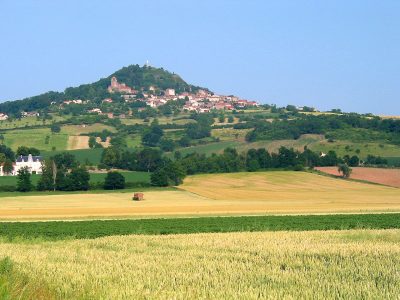
Following an exploration phase, subsurface conditions at the Tromm region in the Odenwald forest in Hesse, Germany have been found suitable for a planned underground geothermal research facility. The project will now progress to the planning and permitting phase.
As first reported in 2022, the Geothermal Laboratory in the Crystalline Basement (GeoLaB) is a joint project of the Karlsruhe Institute of Technology (KIT), the GFZ Helmholtz Centre for Geosciences, and the Helmholtz Centre for Environmental Research (UFZ). This is envisioned as an underground rock laboratory that will be a facility to investigate how geothermal energy from deep crystalline rock can be safely and efficiently harnessed.
The GeoLaB project is funded with approximately EUR 35 million euros by the Federal Ministry for Research, Technology and Space (BMFTR), and another EUR 15 million from the Federal Company for Radioactive Waste Disposal (BGE).
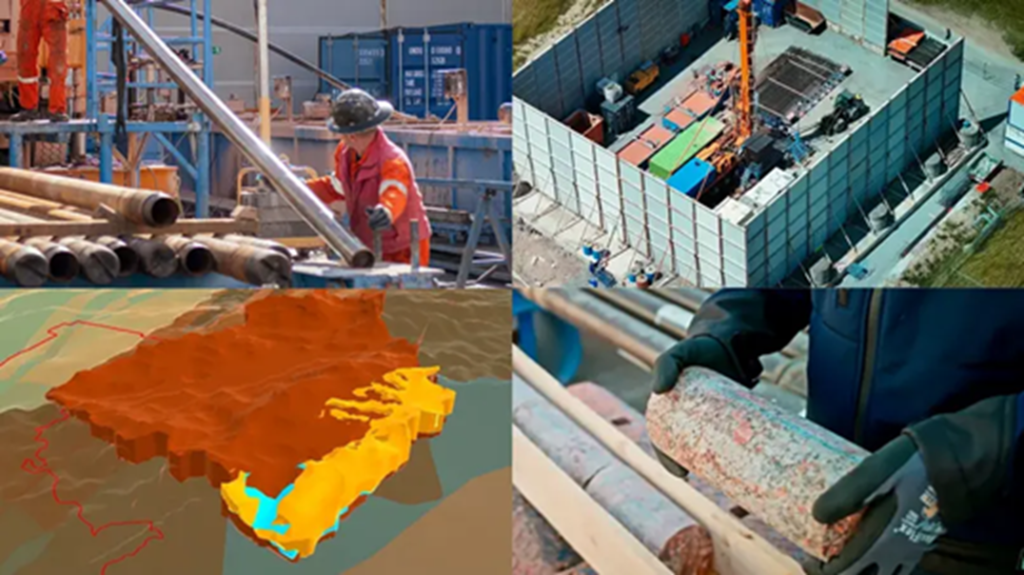
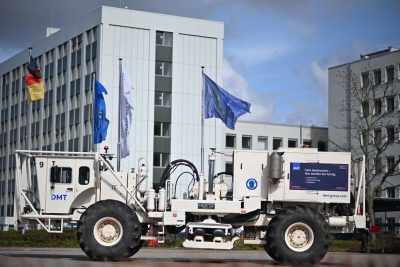
The assessment of the suitability of the subsurface was based on extensive investigations, including two exploratory boreholes with core sampling and measurement programs, two seismic campaign led by GFZ, and a digital twin developed by UFZ.
The results show that there are three distinct zones in the subsurface – a granite in the upper area with substantial fractures and alteration, a transition zone, and a metamorphic gneiss layer. Thus, the setting offers clearly defined geological parameters and a complexity typical of crystalline reservoirs in Europe.
With the conclusion of the exploration phase, detailed planning of the rock laboratory is now beginning, followed by an extensive approval process. The involved parties are also determining the precise location for the access tunnel and planning the surface and underground infrastructure. As Prof. Ingo Sass, spokesperson for the GeoLaB Science Group from GFZ, indicates, this will involve more exploratory drilling and a 3D geophysical survey.
Source: Karlsruhe Institute of Technology and GFZ Helmholtz Centre for Geosciences