Ufuk Sentürk, Chairman of the Board of the Geothermal Power Plant Investors Association (JESDER) in Türkiye, has called for faster action to unlock the country’s geothermal potential through new exploration and plant construction.
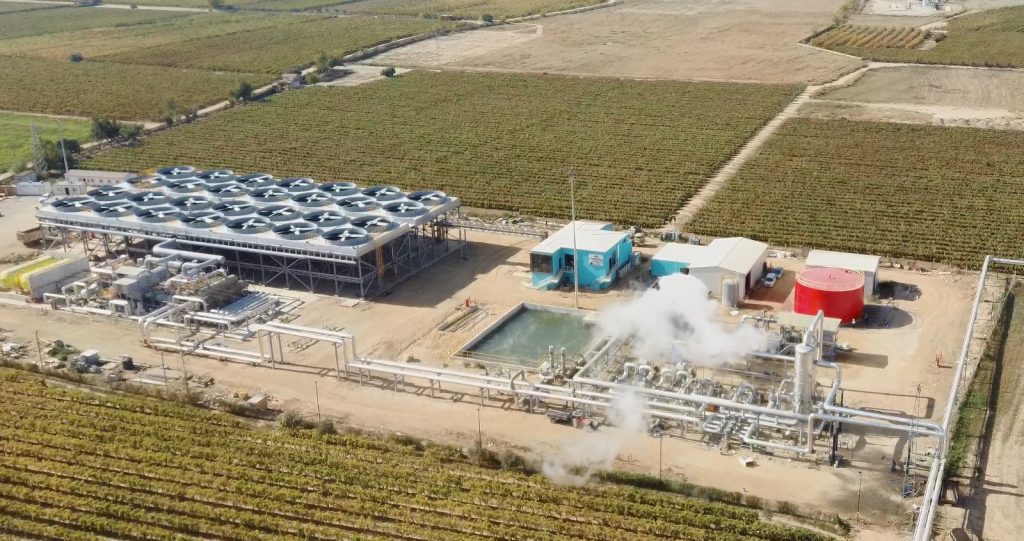
Following his re-election as JESDER President, Sentürk told Anadolu Agency that the Aydin-Denizli-Manisa corridor remains the country’s core geothermal zone. He said that to utilise this potential fully, the legislative framework must be clarified and the draft amendment to the Environmental Impact Assessment Regulation swiftly enacted to build investor confidence and predictability. At the same time, there is also movement on development in East Anatolia, where ignis Energy pushing forward on the development of five projects.
While somewhat experiencing a slow-down in activities in the past few years after exponential growth to now 1,751 MW of installed geothermal power generation capacity, things are clearly picking up again with several projects nearing start of operation and additional drilling planned. See further news on the country here and here.
Medium- and long-term priorities
Sentürk highlighted that increasing exploration, drilling, and data collection capacity would speed up sector growth. He noted growing discussions around storage and hybrid power models, as well as the post-YEKDEM pricing framework.
“In the long term, sustainable production, proper reinjection, and integrated use of geothermal resources must become key priorities,” he said, adding that combining geothermal with other technologies could attract further investment.
Private sector as the driver
Sentürk underlined that geothermal progress is impossible without private-sector involvement, as nearly all resource licences are privately held. “The state should act as an active partner, share risks, and motivate investors,” he said, suggesting a state-backed drilling guarantee fund using the one-percent state share paid by licence holders.
Incentives and cost relief
He also proposed extending Social Security Institution (SGK) and land incentives to the drilling phase, alongside value-added tax and fuel exemptions to ease high exploration costs. Local manufacturing policies should consider domestic raw-material limits to remain economically viable.
Sentürk concluded that Türkiye should evolve from a market focused on plant construction to one exporting geothermal technology and expertise. Strengthened international cooperation between the public and private sectors, he said, will be essential for this transition.
Source: Anadolu Agency via Ensondakika